
SIP-1111™ Refinery
MOLECULAR ASPHALTENE MANAGEMENT
Designed for the molecules that make bottom-of-barrel streams hard to use.
Deeper refining and solvent deasphalting concentrate the largest, most aromatic and heteroatom-rich molecules in the residue. Their aggregation drives brittleness and limits how much of the stream can become quality paving asphalt.
- Target the aggregate SIP-1111™ uses controlled oxirane functionality to interact with asphaltenes at asphalt-processing temperatures and stabilize them within the binder system.
- Restore compatibility The semi-epoxidized structure combines asphalt-compatible fatty segments with reactive sites selected to avoid the weak staying power of unmodified oil and the excessive multifunctionality of fully epoxidized oil.
- Preserve the grade window Formulation work evaluates both the softening needed to make difficult residue workable and the high-temperature properties needed for the finished paving grade.
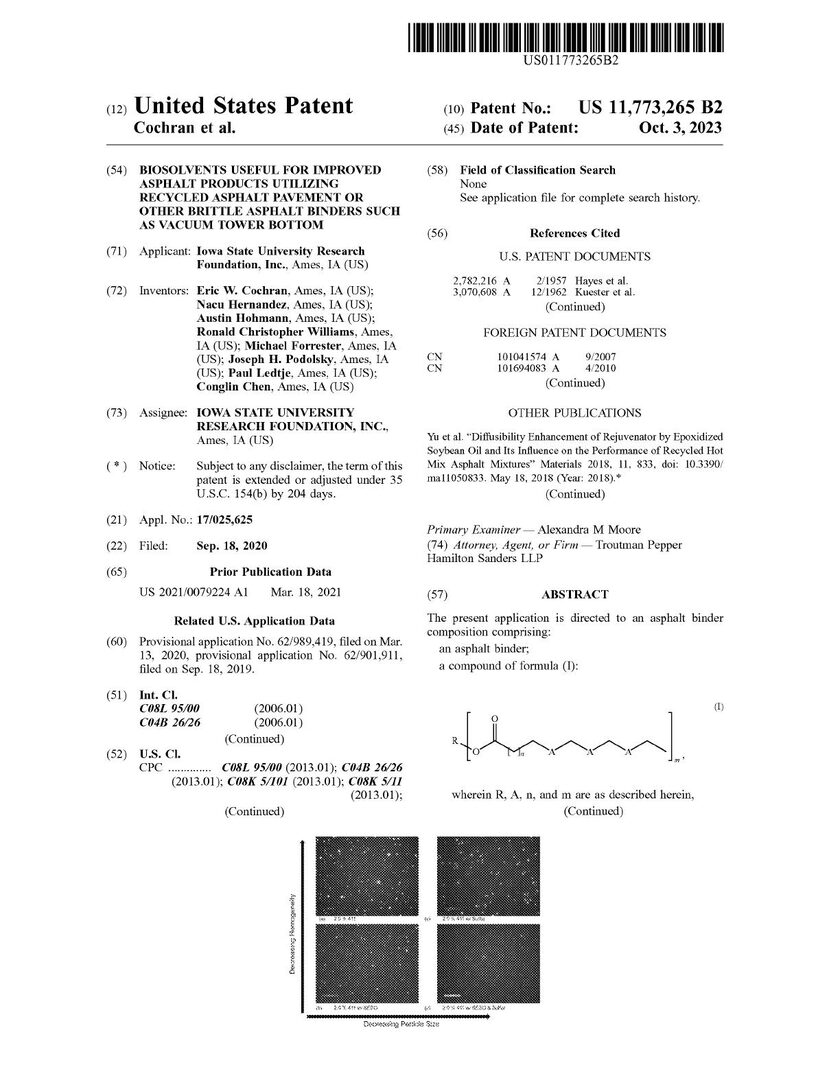
Issued patent
Patent for brittle refinery binders
Covers biosolvent compositions for asphalt products made with brittle binders including vacuum tower bottoms.
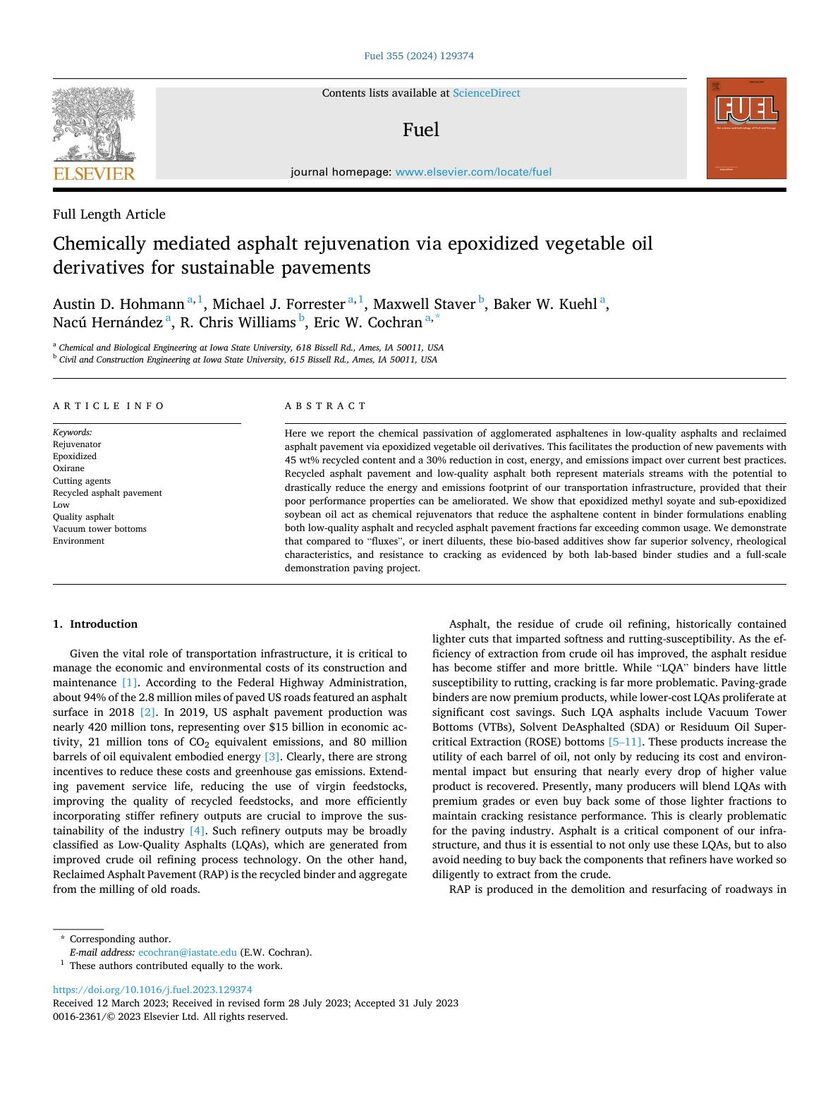
Journal article
Peer-reviewed low-quality asphalt study
Examines semi-epoxidized soybean-oil chemistry with low-quality asphalt, vacuum tower bottoms, recycled binder, aging, and field validation.
Hohmann, Austin D.; Forrester, Michael J.; Staver, Maxwell; Kuehl, Baker W.; Hernandez, Nacu; Williams, R. Chris; Cochran, Eric W. "Chemically mediated asphalt rejuvenation via epoxidized vegetable oil derivatives for sustainable pavements." Fuel 355 (2024) 129374. https://doi.org/10.1016/j.fuel.2023.129374.
FROM FORMULATION TO PAVEMENT
Shift the operating line, then prove the finished asphalt.
The refinery case study follows the decision that matters commercially: recover more high-value material, restore the resulting residue, and verify that the asphalt still meets binder and mixture performance targets.
Concentrated formulation
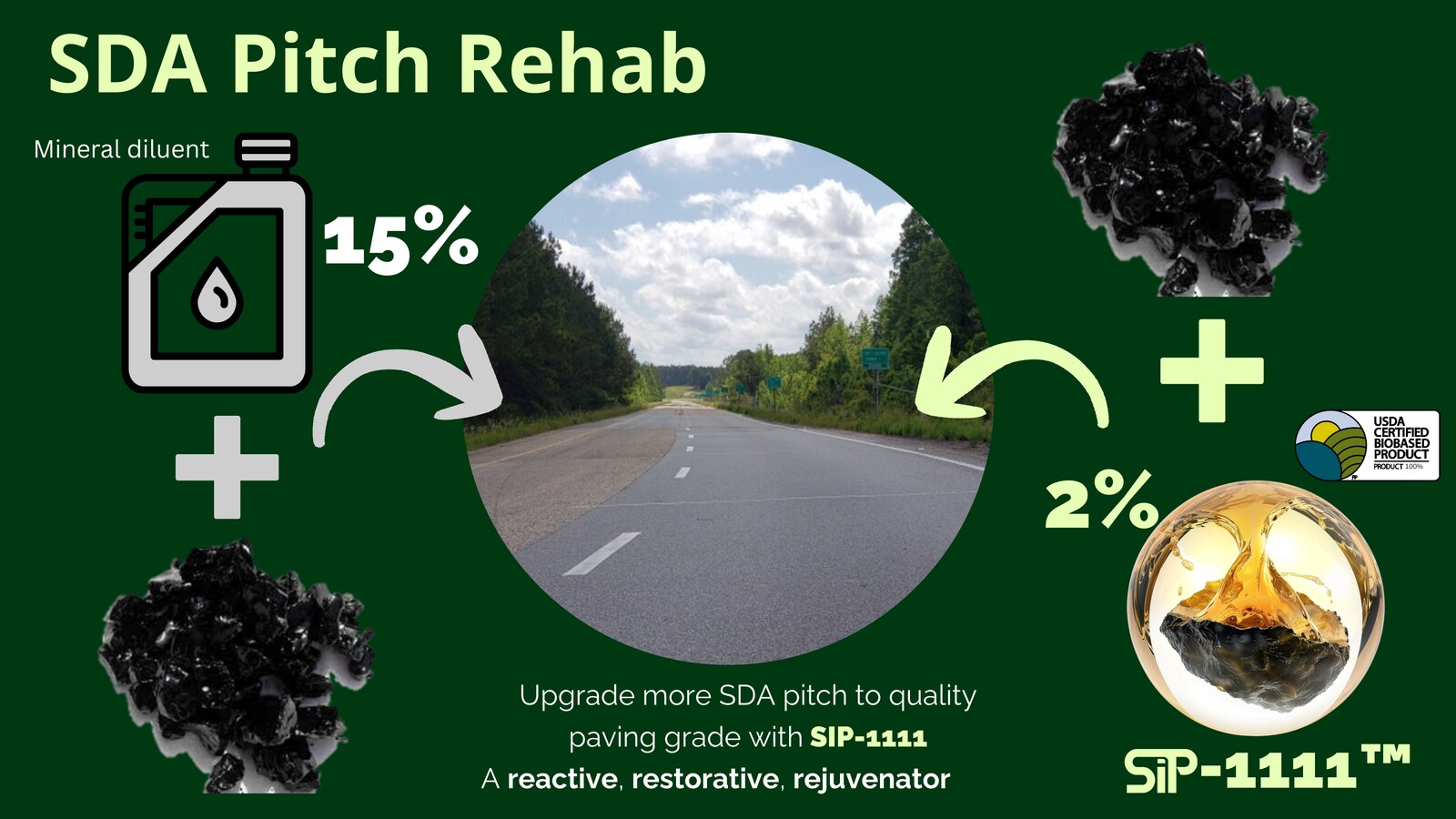
2% case-study dosageIn the presentation's SDA-pitch case study, a 2% SIP-1111™ formulation moved the difficult base material into the illustrated 50/70 grade window, compared with 15% mineral diluent in the reference pathway.
High-temperature performance
Grade and MSCR checkedUnaged and RTFO-aged testing in the case study shows the SIP-1111™ formulations passing the illustrated high-temperature specification while maintaining favorable MSCR rutting response.
Balanced mixture response
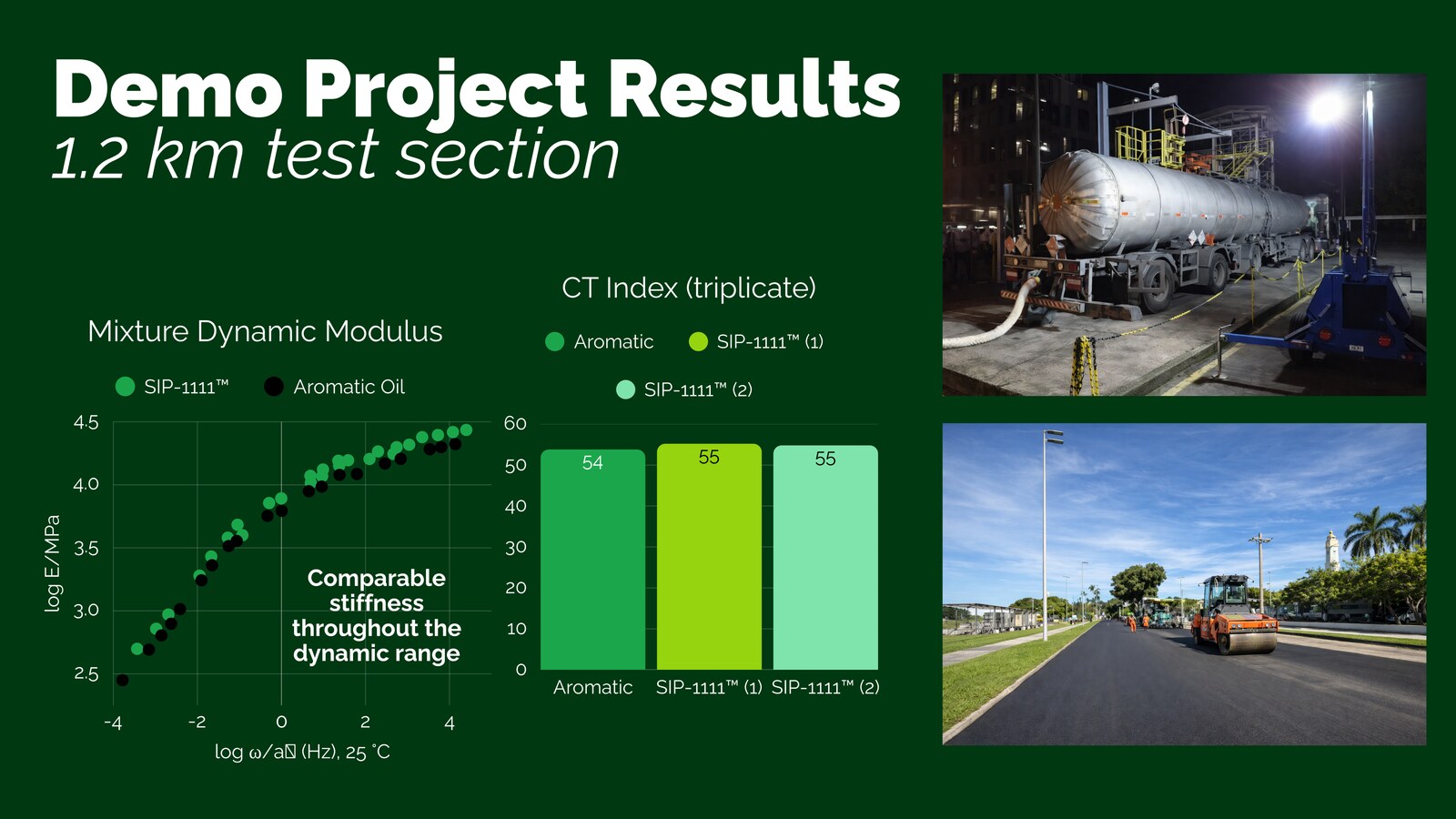
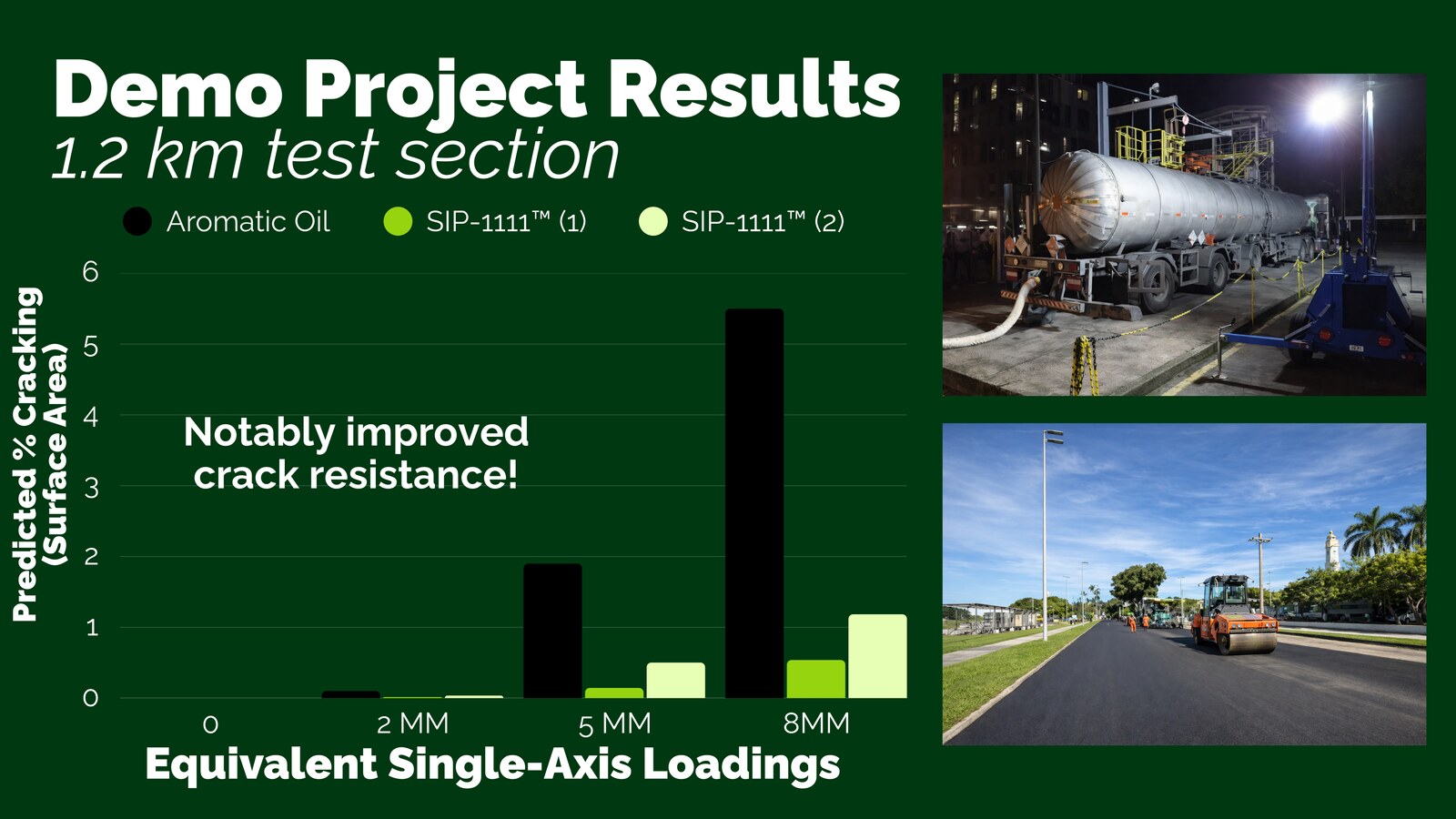
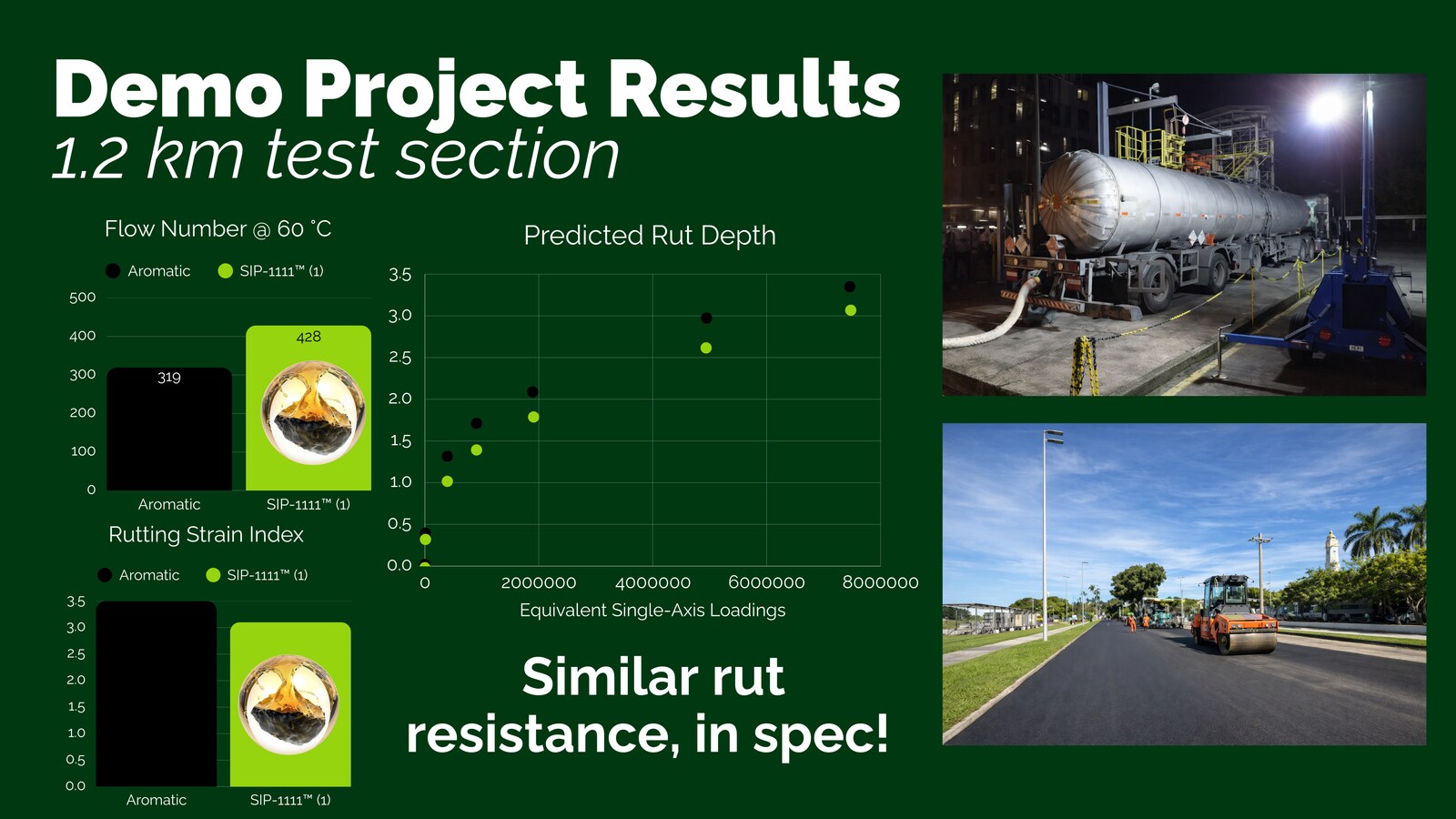
1.2 km field sectionA 1.2 km demonstration section paired comparable dynamic modulus with improved predicted cracking response and in-spec rut resistance.
Scale through evidence
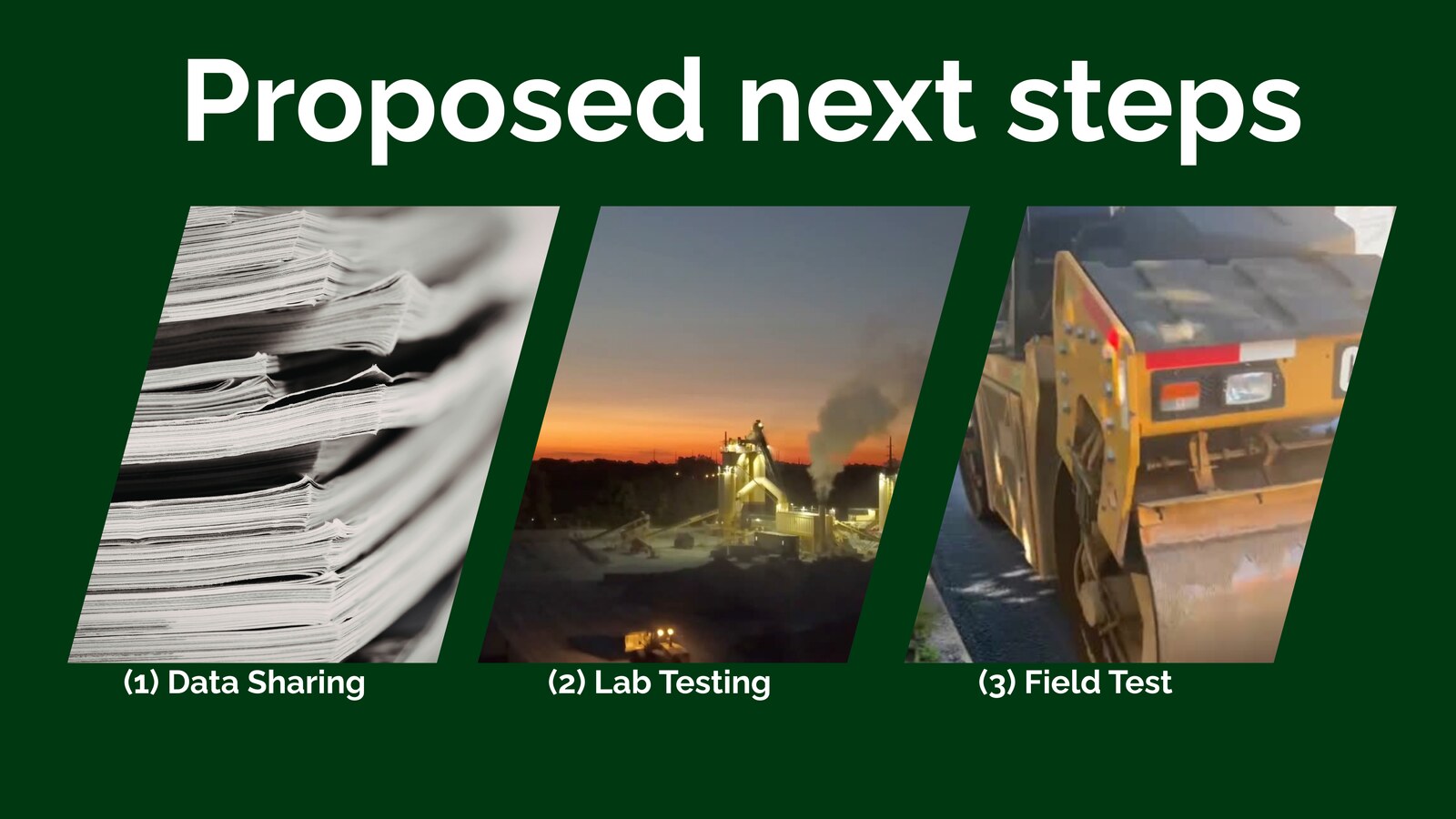
Data · Lab · FieldSoyLei's refinery evaluation path progresses from data sharing to laboratory formulation and then to a production or field trial built around the refinery's actual streams.
Case-study results apply to the tested materials and formulations. Finished grades and dosage depend on residue chemistry, available blend stocks, processing conditions, and target specifications.
THE REFINERY STORY
From deeper conversion to finished paving performance.
Trace the commercial problem, molecular response, formulation strategy, and field-validation path behind SIP-1111™ for refineries.
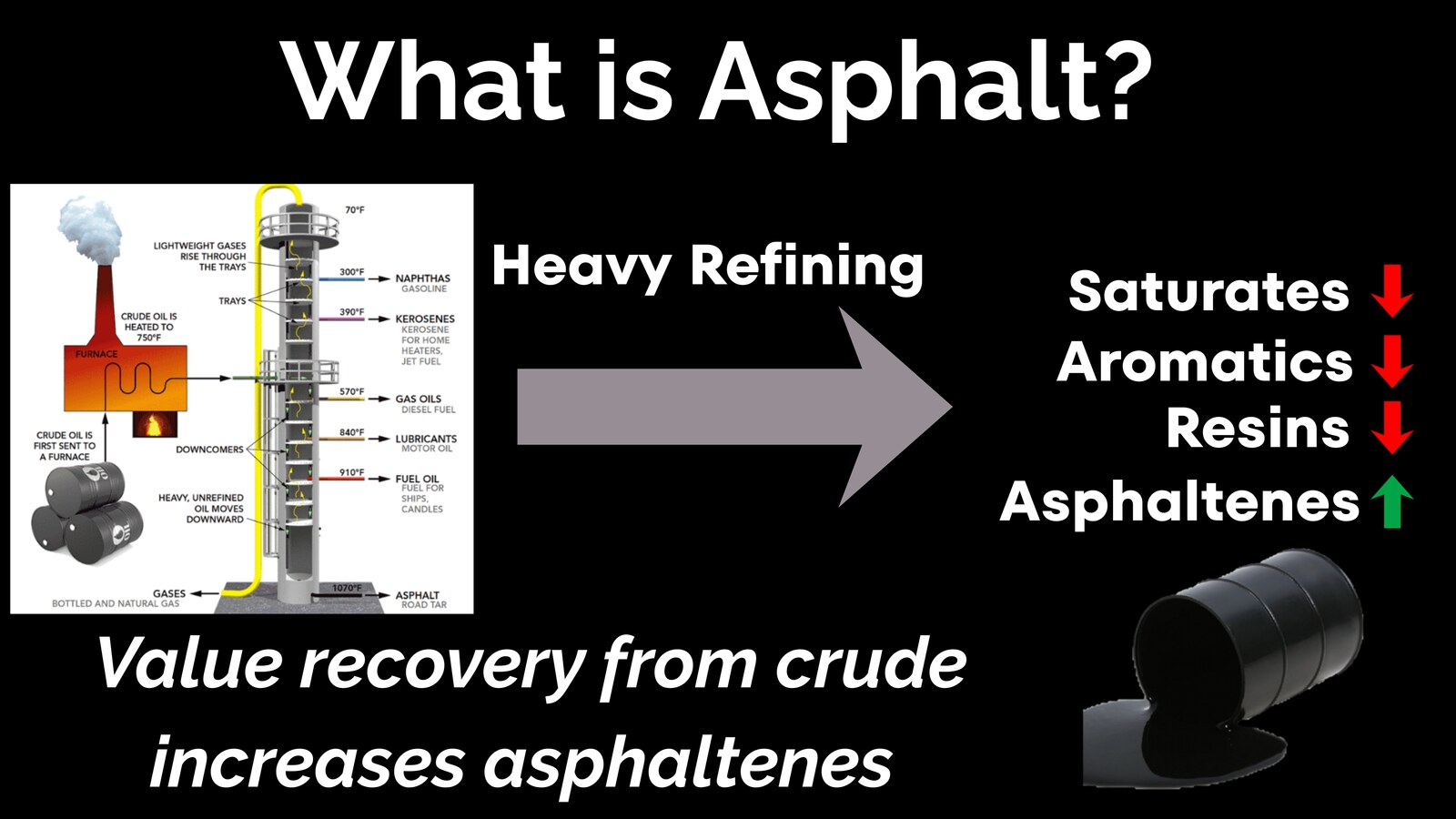
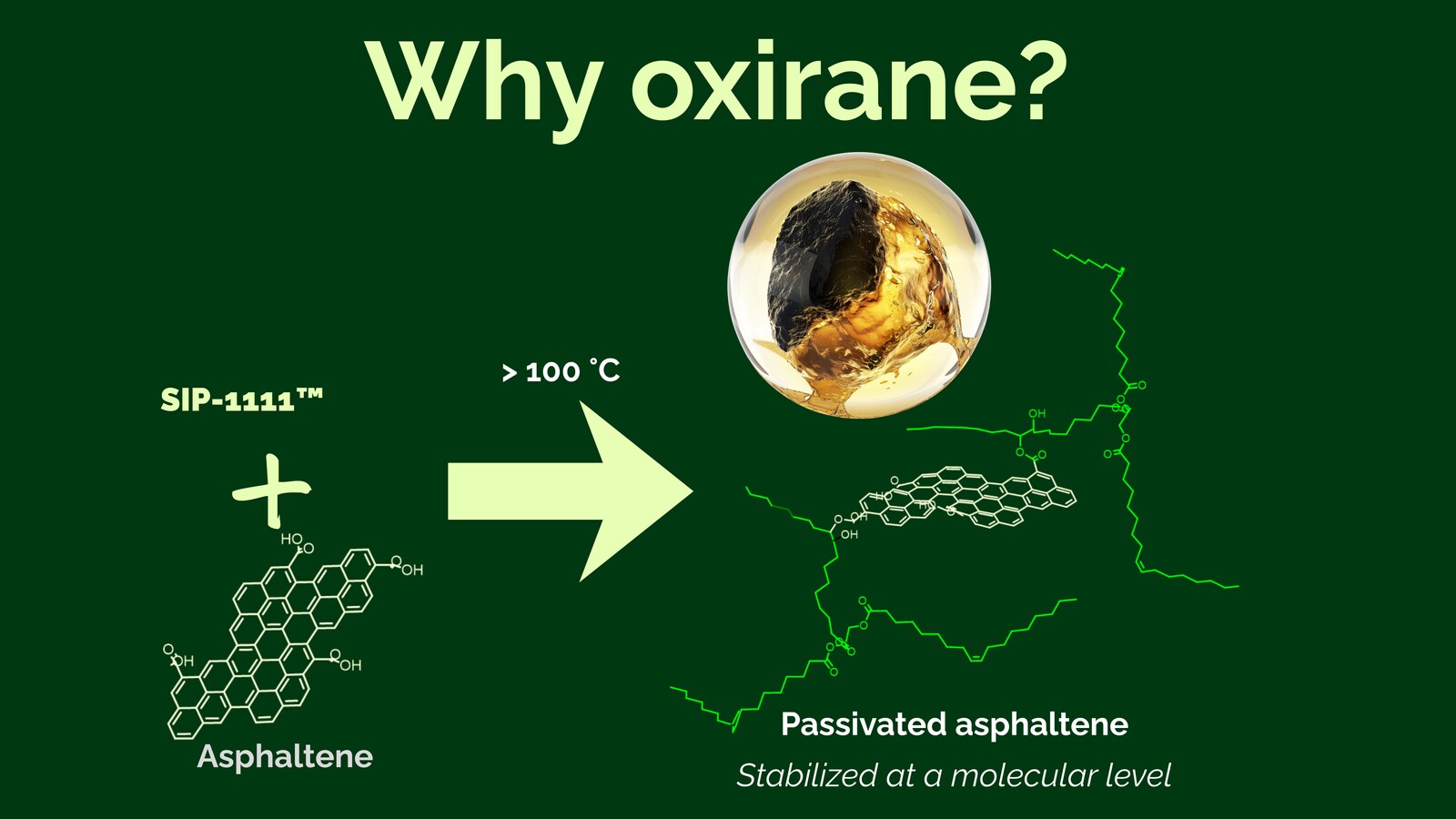
REFINERY TECHNICAL PRESENTATION
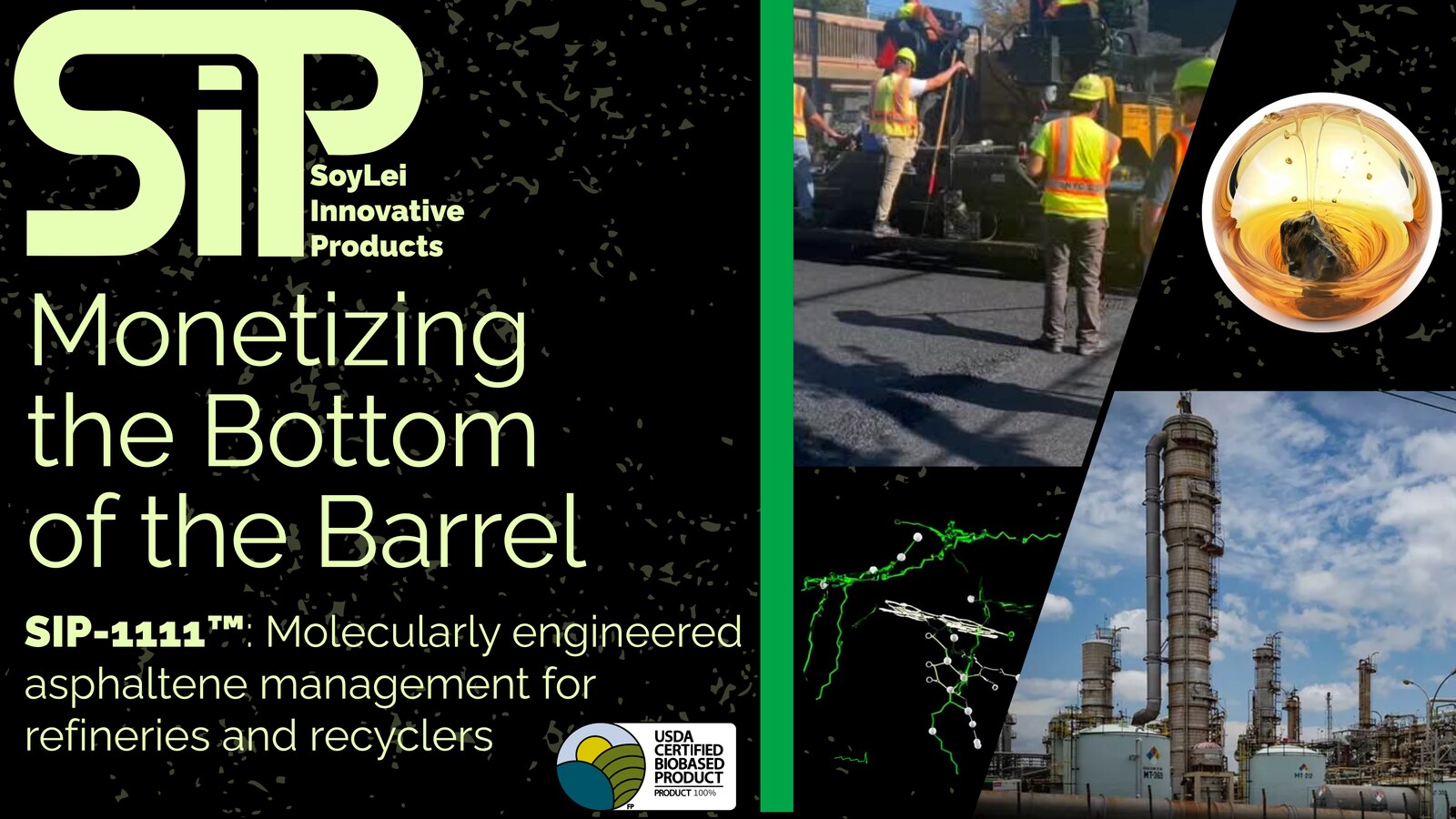
Monetizing the Bottom of the Barrel
Follow the complete story from refinery conversion and asphaltene aggregation through molecular design, SDA-pitch formulation, binder testing, and field demonstration.
TECHNICAL RESOURCES
Bring your residue data. Inspect the chemistry and application record.
Start with the refinery application documents, then review the issued patent and peer-reviewed paper behind the asphaltene-management strategy.
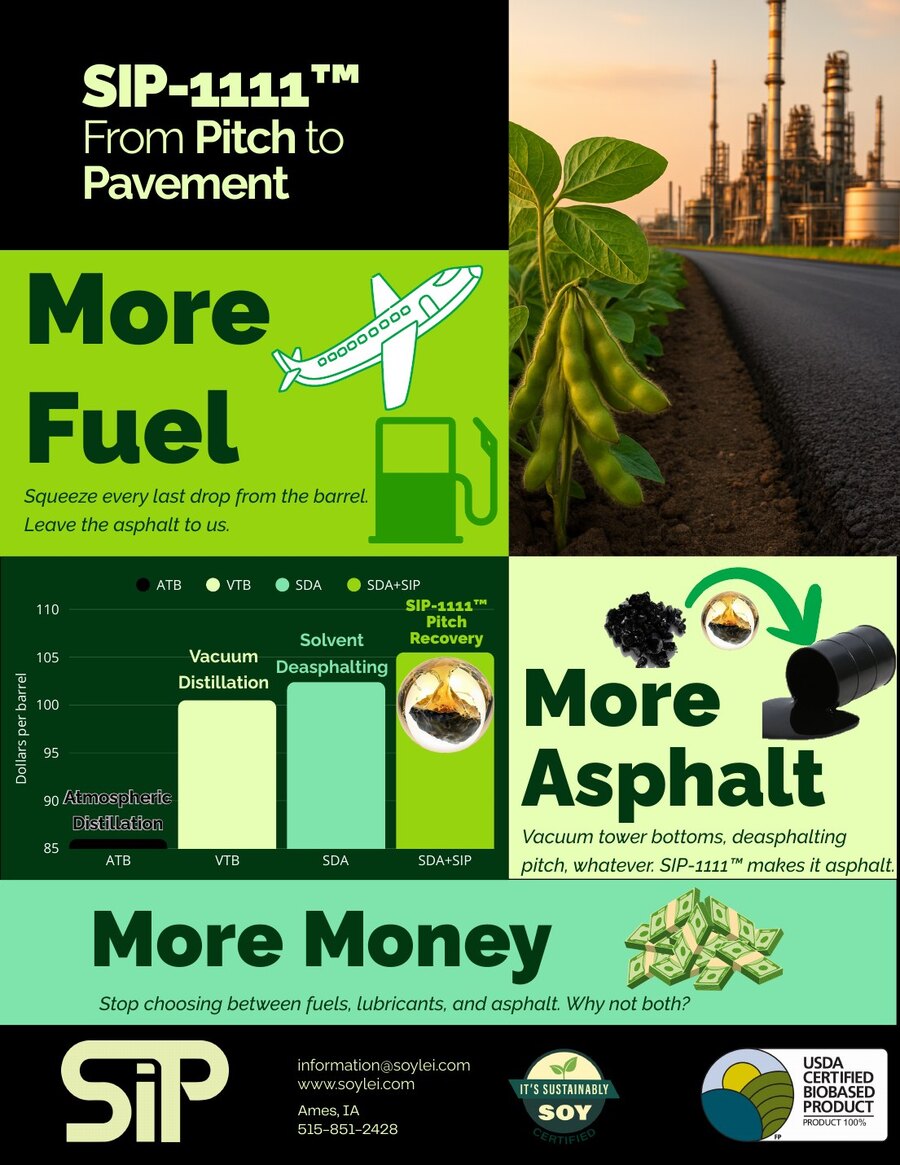
SIP-1111™ refinery case study
Application overview for upgrading stiff refinery residue and difficult asphalt blend stocks.
Open case study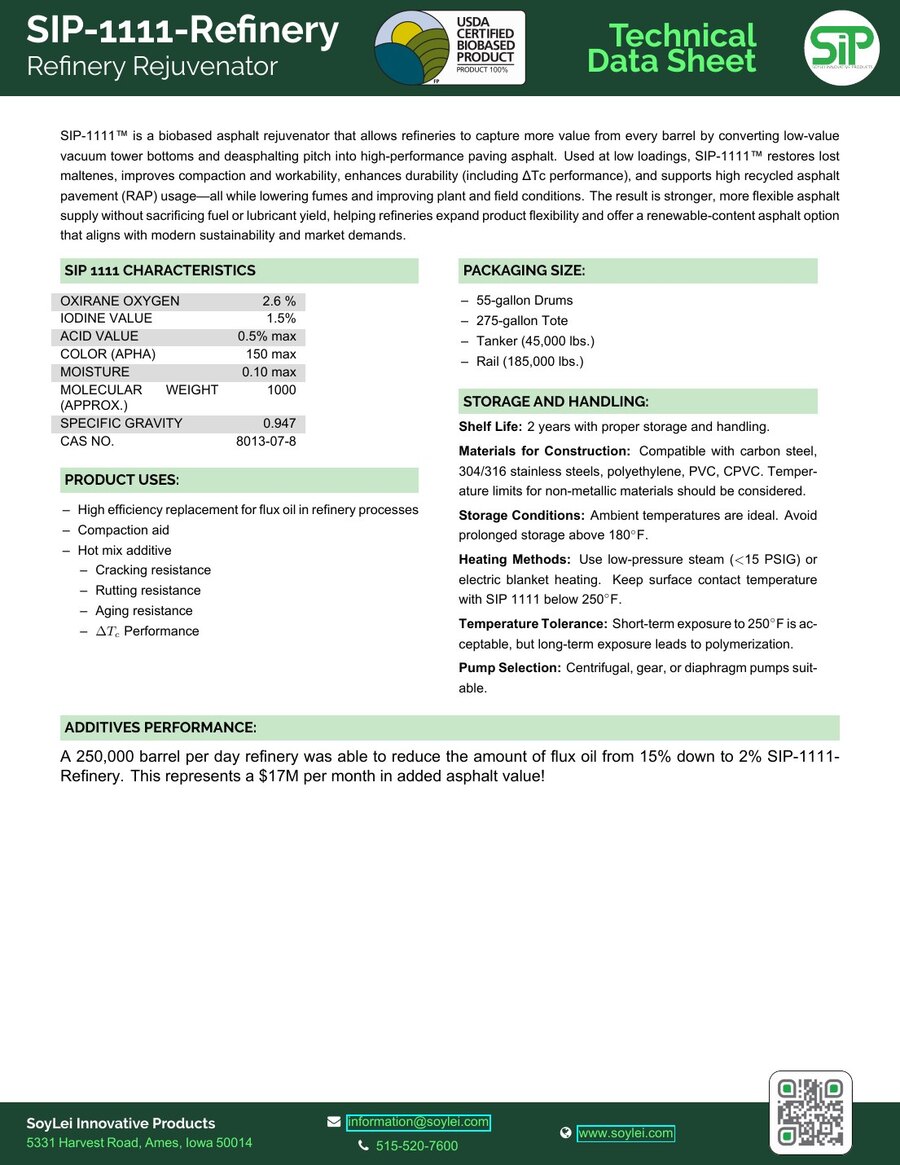
SIP-1111™ refinery technical data
Technical product information for refinery and terminal formulation teams.
Open TDS
Patent for brittle asphalt binders
Issued patent covering biosolvent compositions for RAP and brittle asphalt binders such as vacuum tower bottoms.
Read patent
Hohmann et al. Fuel paper
Peer-reviewed evidence connecting semi-epoxidized soybean-oil chemistry with low-quality asphalt, binder aging, and field performance.
Read manuscriptREADY TO FORMULATE?
Bring SoyLei your RAP target, binder grade, refinery residue, or cold-recycling problem.
SIP-1111™ is sold through commercial and technical support channels. Contact SoyLei for pricing, formulation guidance, documents, and project-fit review.