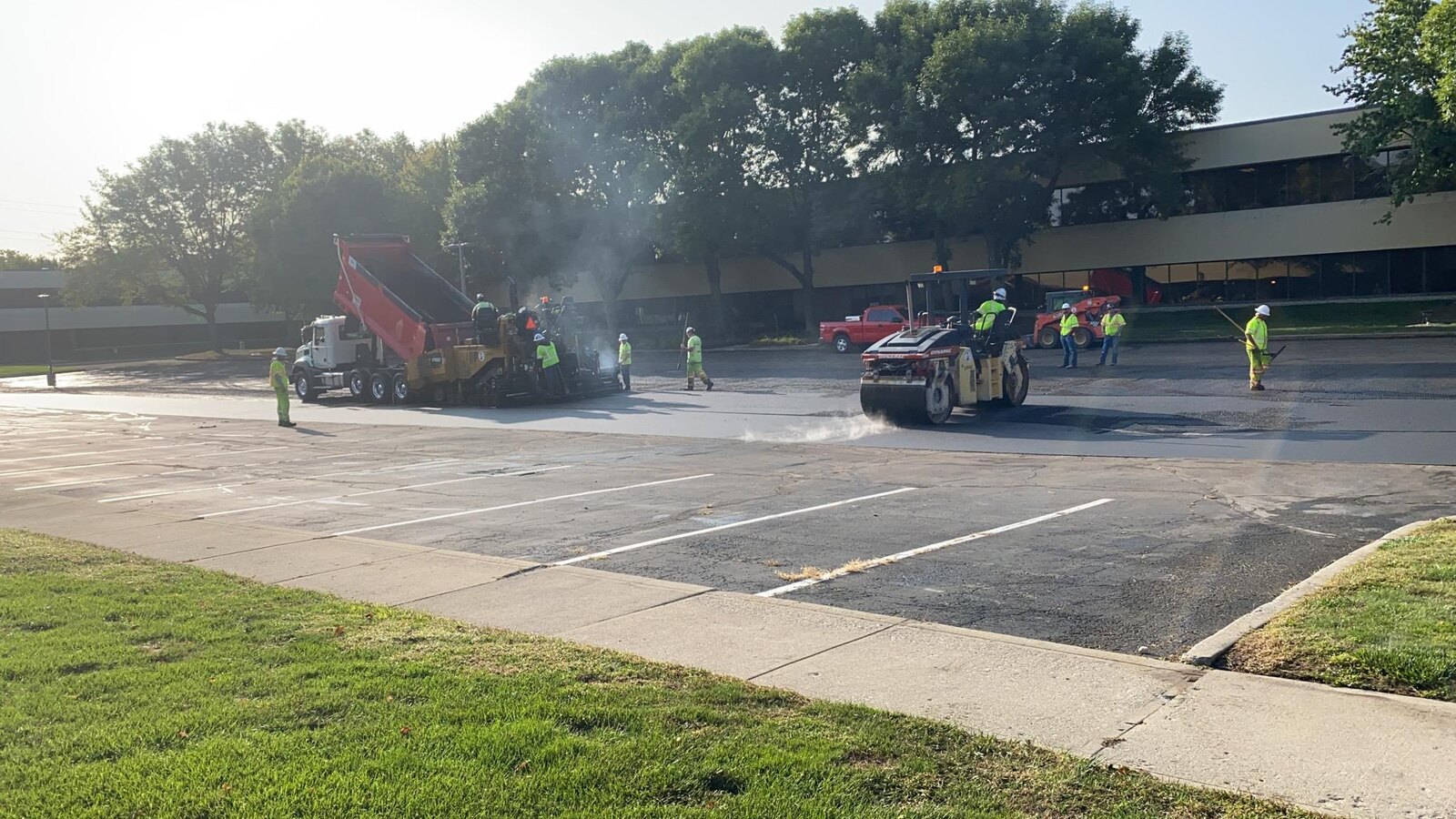
On October 25, 2020, a full-scale parking-lot demonstration at the Indiana Soybean Alliance headquarters in Indianapolis placed separate control, SIP-1111™, and BioMAG™ test sections. This article covers the distinct BioMAG™ section, which put 40% reclaimed asphalt pavement into a polymer-modified hot-mix asphalt formulation.
BioMAG™ combines 50% SIP-1111™ rejuvenator with 50% biopolymer. The BioMAG™ section used that polymer-and-rejuvenator combination with supplemental SIP-1111™ and a PPA-spiked 70-22S binder, linking reclaimed-binder restoration with high- and low-temperature binder performance.
40% RAP with a combined chemistry strategy
The project tracking record documents liquid BioMAG™ mixed in a tanker truck and held for a two-day reaction period before paving. A companion rejuvenator record for the same date and location documents the supplemental SIP-1111™ addition. The project summary expresses the formulation as 5.4% BioMAG™ plus 1.8% supplemental SIP-1111™ on a total-asphalt-content basis.
The detailed binder table expresses the field blend on a different basis: 9.0% BioMAG™ plus 3.5% SIP-1111™ by neat binder. The two source representations are retained on their stated bases rather than converted. Both identify the combined-chemistry BioMAG™ section, separate from the SIP-1111™-only section evaluated in the Fuel paper.
Binder performance reached approximately PG 64H-28
The project summary reports the resulting binder at approximately PG 64H-28. Its ΔTc was -2°C, three degrees above the summary’s stated passing threshold of greater than -5°C. That result joined a high-temperature H traffic designation with a -28°C low-temperature grade in a 40% RAP design.
Three cracking measures exceeded the project thresholds
The reported mixture results cleared every cracking threshold listed in the project summary:
| Measure | Reported result | Project threshold | Margin above threshold |
|---|---|---|---|
| I-FIT flexibility index | 12 | Greater than 8 | 4 index points |
| CT index | 122 | Greater than 80 | 42 index points |
| DCT fracture energy | 554 J/m² | Greater than 400 J/m² | 154 J/m² |
I-FIT, CT index, and DCT evaluate cracking resistance through different loading and temperature conditions. Their combined result gives producers and owners a broader performance view than a single specification number, while the binder grade and ΔTc connect the mixture response to recovered-binder behavior.
A production-scale formulation for high-RAP asphalt
The BioMAG™ section demonstrates how BioMAG™ and supplemental SIP-1111™ can work together in a production asphalt formulation. It incorporated 40% RAP, used tanker blending and a defined reaction period, achieved an approximately PG 64H-28 binder, and exceeded the three cracking thresholds reported for the mixture.
The same physical parking lot also contained a separate SIP-1111™-only section. The peer-reviewed Fuel study reports that section at 5.7% SIP-1111™ by neat binder and compares it with the 25% RAP control. Read the SIP-1111™ section article for its recovered-binder, DCT, and Hamburg results.
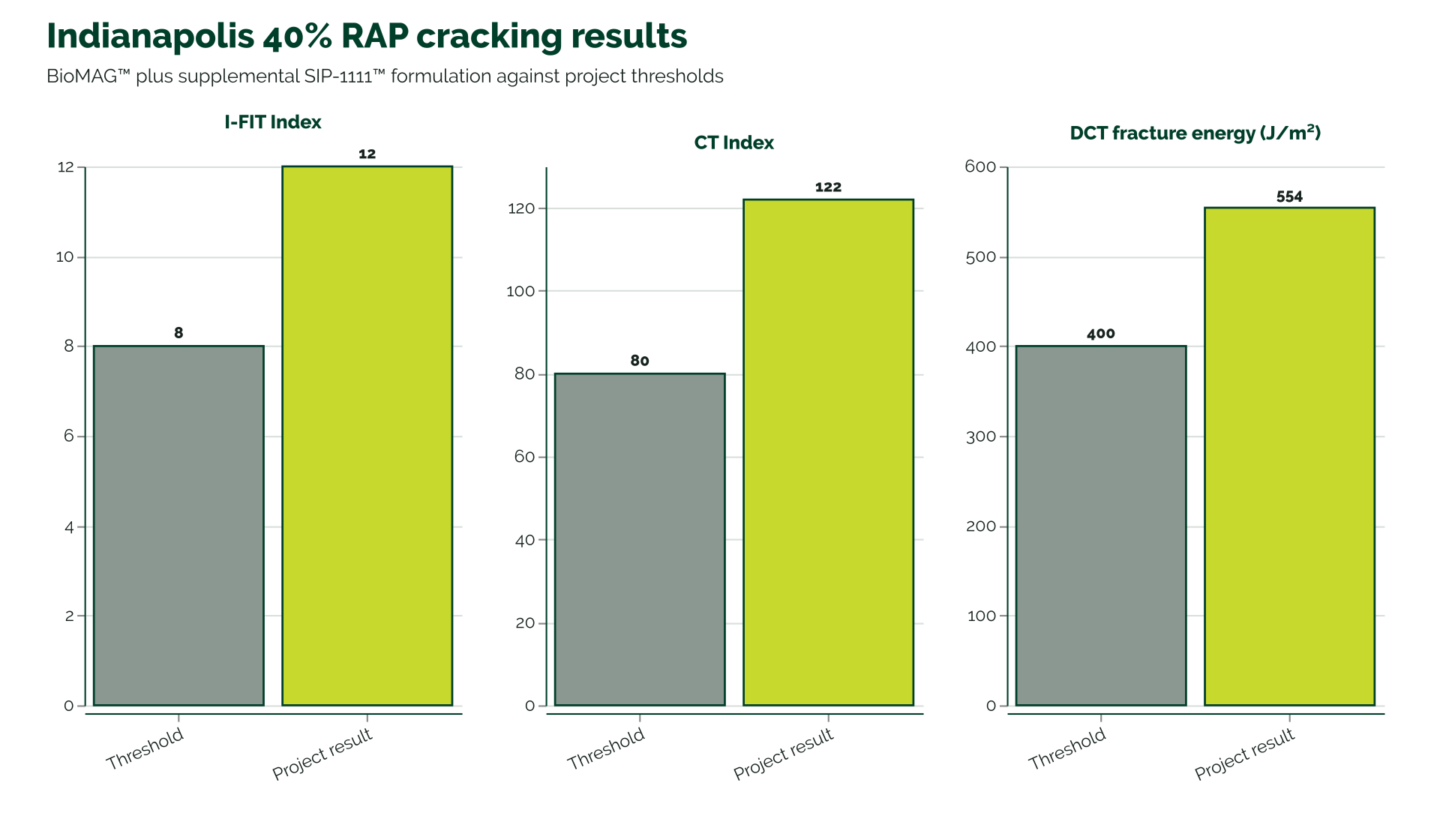
Higher I-FIT, CT Index, and DCT fracture energy are favorable.
| Metric | Project result | Project threshold | Unit |
|---|---|---|---|
| I-FIT | 12 | 8 | index |
| CT Index | 122 | 80 | index |
| DCT fracture energy | 554 | 400 | J/m² |
Source: When the (Bio)Rubber Met the Road. Indiana Soybean Alliance Parking Lot slide, PDF page 21
Review SIP-1111™ · See related demonstration projects · Discuss a high-RAP or polymer-modified formulation with SoyLei
Source Documents
- Chemically mediated asphalt rejuvenation via epoxidized vegetable oil derivatives for sustainable pavements, Fuel, 2023
- SIP-1111™ Demonstration Paving Results, SoyLei Innovations, 2025