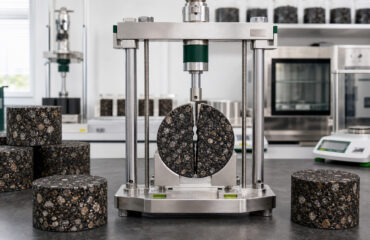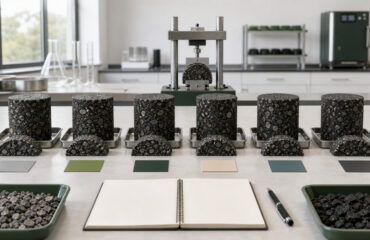
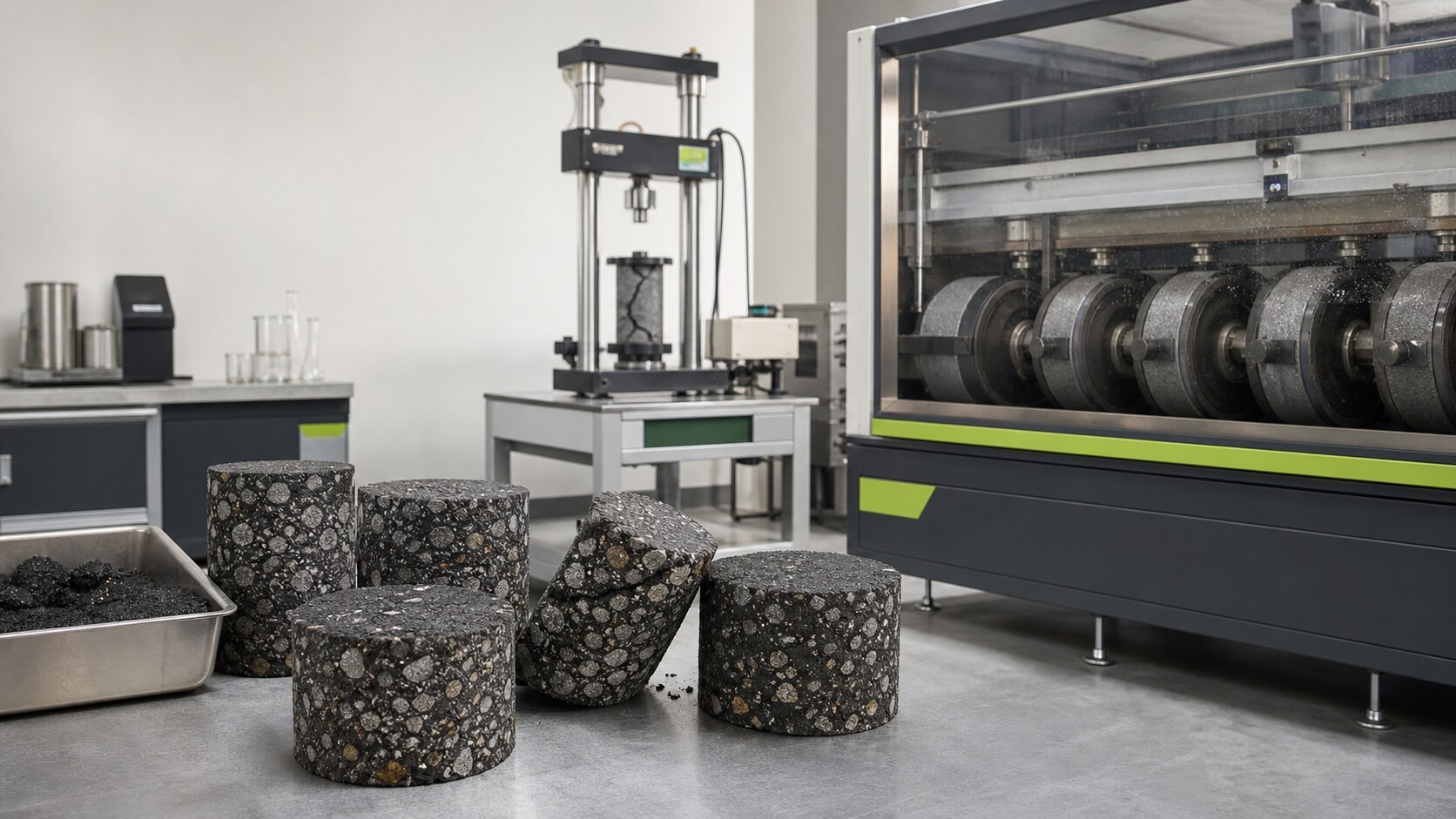
AASHTO Product Evaluation and Audit Solutions evaluated SIP-1111™ through its Asphalt Mixture Recycling Agent DataMine program. The laboratory program compared a 45% RAP control mixture with the same mixture containing SIP-1111™ at 3.2% by weight of virgin asphalt binder.
The results show a useful balance for high-RAP design: the treated binder moved toward lower-temperature performance, cracking-test averages increased, and Hamburg rut depth remained below 4 mm after 20,000 passes.
Download the complete AASHTO DataMine report
The evaluated mixture
| Evaluation variable | Reported value |
|---|---|
| DataMine number | AMRA-2025-02-003 |
| Evaluation type | New Product Evaluation, AMRA Lab Mixed |
| RAP content | 45% |
| SIP-1111™ dosage | 3.2% by weight of virgin asphalt binder |
| Compared mixtures | Control and SIP-1111™ AMRA |
Low-temperature binder performance moved in the right direction
After one PAV cycle, the reported continuous binder grade changed from 69.7/-23.6 for the control to 63.5/-28.7 with SIP-1111™. Delta Tc moved from -2.8°C to +0.5°C. After two PAV cycles, Delta Tc was -4.0°C for the control and -0.1°C for the treated binder.
| Binder result | Control | SIP-1111™ AMRA |
|---|---|---|
| One-PAV continuous grade | 69.7/-23.6 | 63.5/-28.7 |
| One-PAV Delta Tc | -2.8°C | +0.5°C |
| Two-PAV continuous grade | 69.7/-21.2 | 63.5/-27.0 |
| Two-PAV Delta Tc | -4.0°C | -0.1°C |
For a producer working with aged RAP binder, those shifts describe a wider low-temperature formulation window and less loss of relaxation behavior through the laboratory aging sequence.
Cracking-test averages increased
The Overlay Test average increased from 225 cycles for the control to 300.3 cycles with SIP-1111™. IDEAL-CT Index increased in both the short-term and long-term conditioned comparisons.
| Mixture test | Control | SIP-1111™ AMRA | Change in average |
|---|---|---|---|
| Overlay cycles to failure | 225 | 300.3 | +33% |
| Short-term IDEAL-CT Index | 14.6 | 16.7 | +14% |
| Long-term IDEAL-CT Index | 4.2 | 4.8 | +14% |
Hamburg performance stayed tight at 20,000 passes
Hamburg rut depth at 20,000 passes was 3.1 mm for the control and 3.5 mm for the SIP-1111™ mixture. The 0.4 mm difference shows the high-temperature side of the softening response while both reported rut depths remained compact.
The binder MSCR result follows the same pattern: Jnr 3.2 increased from 1.4 to 4.9 kPa-1. Producers can use the full result set to tune dosage, virgin binder, aggregate structure, and any polymer package around the project’s climate and traffic requirements.
What PEAS gives an asphalt buyer
The DataMine report puts binder and mixture measurements from an AASHTO evaluation program in one place. It gives agencies, contractors, and mix designers a common technical starting point for project-specific trials and balanced mix design.
AASHTO PEAS evaluation records test results. Product approval, qualified-product-list placement, and specification decisions remain with the responsible agencies and their established processes.
Review the SIP-1111™ product hub · Discuss a high-RAP formulation
Source Documents
- AASHTO DataMine – Asphalt Mixture Recycling Agent, AASHTO Product Evaluation and Audit Solutions, 2026-02-06 Full evaluation report hosted by SoyLei.