
Saturday, 25 July 2026 / Published in Asphalt Research, SIP-1111™, SIP-1111™ Rejuv
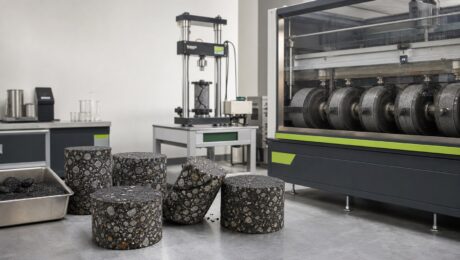
Asphalt specimens and laboratory testing equipment arranged around a roadway-materials workbench.
AASHTO PEAS evaluated SIP-1111™ in a 45% RAP laboratory mixture, reporting improved low-temperature binder grade, Delta Tc, Overlay cycles, and IDEAL-CT results with Hamburg rut depth remaining below 4 mm at 20,000 passes.
Saturday, 25 July 2026 / Published in Demo Projects, SIP-1111™, SIP-1111™ Rejuv
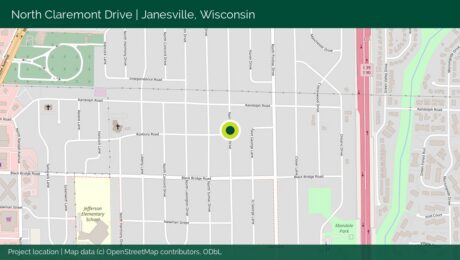
Street map of Janesville centered on the SIP-1111 project location on North Claremont Drive.
A North Claremont Drive field trial paired 40% aged-binder replacement with 0.5% SIP-1111™. DCT averaged 358 versus 355 J/m² and IDEAL-CT averaged 193.5 versus 188.2 for the same mixture with 0.5% Anova.
Saturday, 25 July 2026 / Published in Asphalt Research, SIP-1111™, SIP-1111™ Rejuv
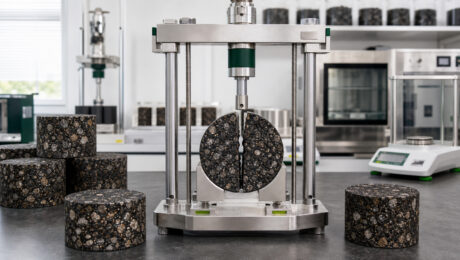
Asphalt specimens surrounding a laboratory fracture-testing fixture, with a split specimen centered in the apparatus.
A Blankenship Asphalt Tech & Training study compared two bio-oil formulations in an engineered 45% RAP mixture and measured the balance between IDEAL-CT cracking tolerance and Hamburg rutting resistance.
Saturday, 25 July 2026 / Published in Asphalt Research, SIP-1111™, SIP-1111™ Rejuv
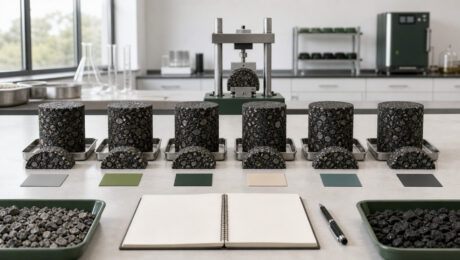
Six unlabeled asphalt specimen sets arranged in a bright laboratory with a cracking-test fixture behind them.
In a blinded ATS comparison, two SIP-1111™ treatments produced the study's two lowest Hamburg deformation values while preserving the full cracking and dosage-efficiency context.
Saturday, 25 July 2026 / Published in Demo Projects, SIP-1111™, SIP-1111™ Rejuv
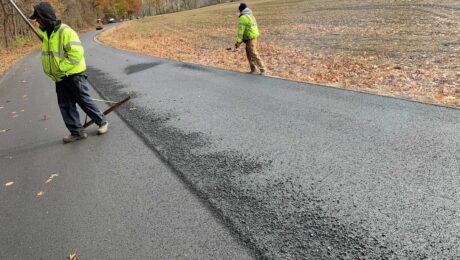
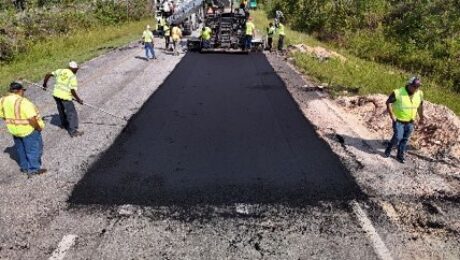
Two crew members rake fresh asphalt on a rural road beside a harvested field.
The Lower Road demonstration used SIP-1111™ to formulate PG 58-28 binder from hard 30-penetration asphalt. The 30% RAP mix raised the reported cracking-test indices and recorded 5.1 mm Hamburg deformation versus 4.5 mm for the 15% RAP control at 45°C.
Saturday, 25 July 2026 / Published in Demo Projects, SIP-1111™, SIP-1111™ Rejuv
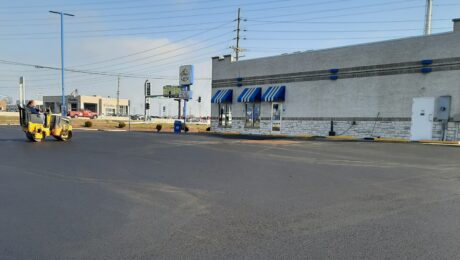
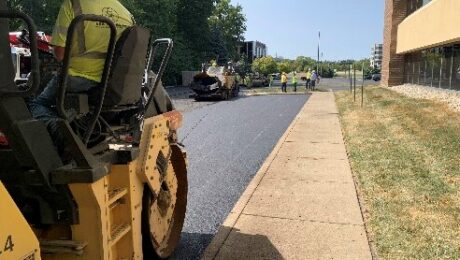
Roller compacting the newly paved asphalt surface beside a commercial building in St. Peters, Missouri.
A full-scale Missouri demonstration compared control, 1.75%, and 3.5% SIP-1111™ sections in a 35% RAP mix, followed by CT Index, DCT, and I-FIT testing at Iowa State University.
Saturday, 25 July 2026 / Published in Demo Projects, SIP-1111™, SIP-1111™ Rejuv
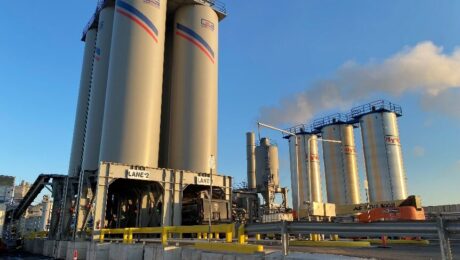
City Asphalt drum plant silos and production equipment under a blue sky in Staten Island.
A Rutgers CAIT field study found that the 45% RAP SIP-1111™ mixture met both report-cited rutting and cracking thresholds.
Saturday, 25 July 2026 / Published in Demo Projects, SIP-1111™, SIP-1111™ Rejuv
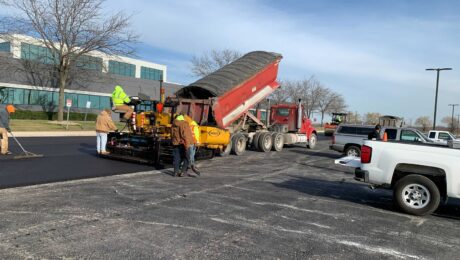
A paver, red haul truck, and crew place asphalt in a parking lot beside an office building.
A 600-ton SIP-1111™ production run combined 35-36% RAP and 5% RAS with PG 70-16 recovered-binder performance and results from two laboratories.
Saturday, 25 July 2026 / Published in Demo Projects, SIP-1111™, SIP-1111™ Rejuv
Paving crew placing the dark 50 percent RAP surface layer on NCAT Test Track Section S1.
NCAT Section S1 combined 50% RAP with 4.1% SIP-1111™ and recorded no visible cracking with less than 3.5 mm rut depth after one year and about 4 million ESALs.
Saturday, 25 July 2026 / Published in Demo Projects, SIP-1111™, SIP-1111™ Rejuv
A roller and paving crew work beside the Indiana Soybean Alliance headquarters.
A 500-ton Indianapolis parking-lot trial compared 40% RAP with SIP-1111™ against a 25% RAP control, measuring recovered-binder, DCT, and Hamburg performance.