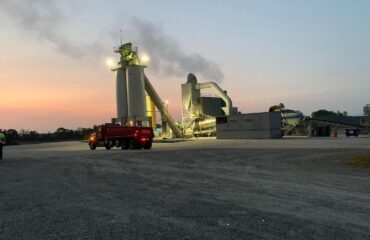
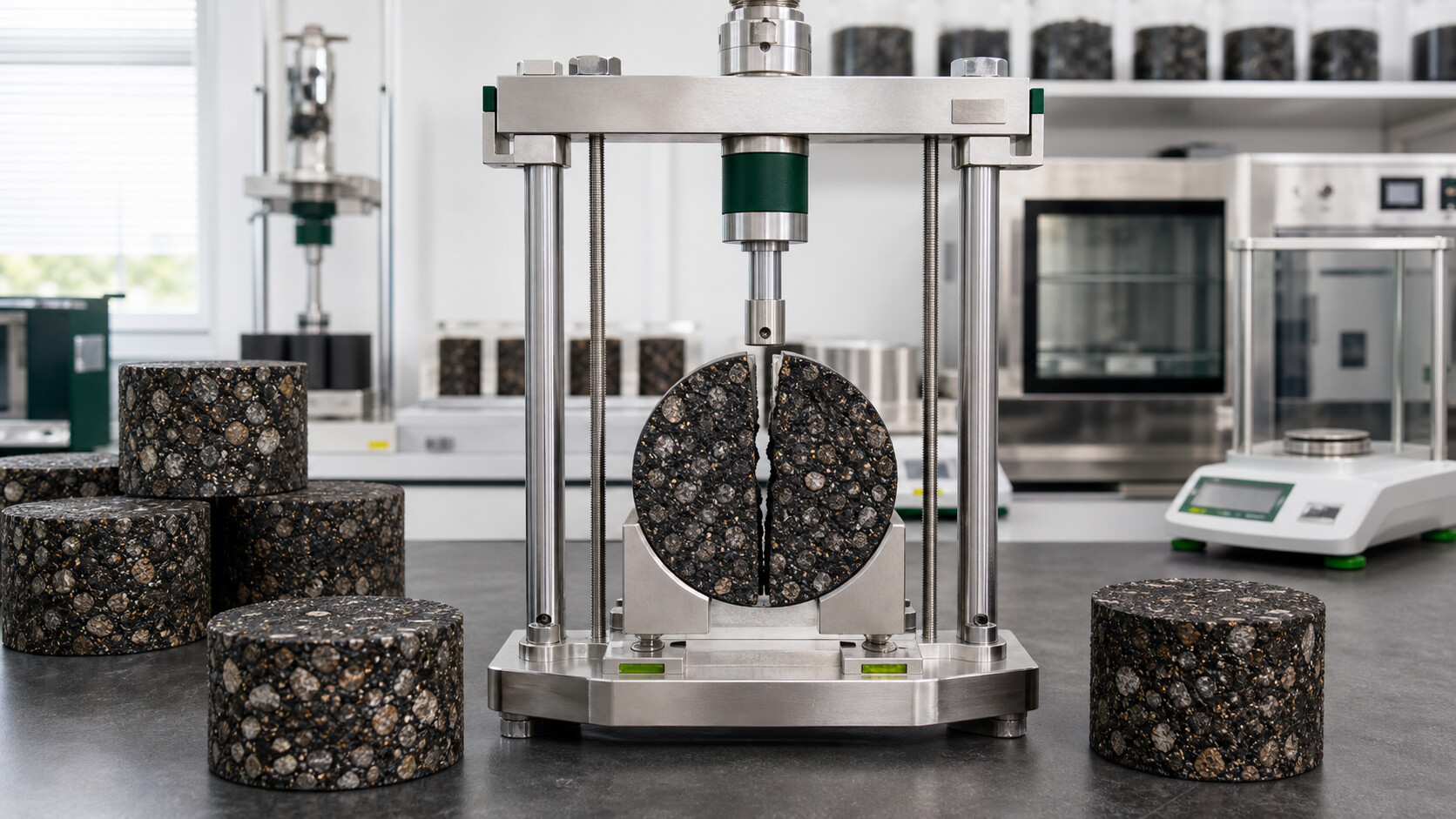
Blankenship Asphalt Tech & Training evaluated SIP-1111™ in an engineered REARM HR mixture containing 45% reclaimed asphalt pavement. The laboratory study compared two bio-oil formulations at the same mixture composition and dosage, then measured cracking and rutting performance using IDEAL-CT and Hamburg Wheel-Track testing.
The SIP-1111™ formulation produced a 29% higher average IDEAL-CT Index than the comparison formulation. Hamburg testing showed the corresponding balanced-mix tradeoff: the comparison formulation delivered greater rutting resistance at the tested dosage.
A demanding high-RAP design
The REARM HR design combined 45% RAP with a PG 64-22 virgin binder and aramid fiber. Each mixture contained 5.4% total asphalt binder. The bio-oil dosage was 4.2% by weight of virgin binder added, and the aramid-fiber dosage was 2.1 ounces per ton.
| Design variable | Study value |
|---|---|
| Nominal maximum aggregate size | 0.38 in. |
| RAP content | 45% |
| RAP binder content | 5.7% |
| Virgin binder grade | PG 64-22 |
| Total binder content | 5.4% |
| Bio-oil dosage | 4.2% by weight of virgin binder added |
| Aramid fiber | 2.1 oz/ton |
Keeping those variables constant gave the laboratory a direct view of how the two bio-oil formulations shifted the balance between cracking tolerance and rutting resistance.
Higher IDEAL-CT cracking tolerance
Four IDEAL-CT specimens from each formulation were tested at 25°C under ASTM D8225. The SIP-1111™ formulation recorded an average CT Index of 115.5, compared with 89.6 for the comparison formulation. That is a 29% increase in the study’s average cracking-tolerance result.
The individual SIP-1111™ results were 97.0, 138.2, 150.1, and 76.5. The comparison results were 105.0, 103.7, 81.6, and 68.0. The report lists coefficients of variation of 29.9% and 20.0%, respectively, preserving the specimen-to-specimen spread behind the averages.
The Hamburg side of the balance
Hamburg Wheel-Track specimens were tested in water at 50°C under AASHTO T 324. Testing ended at 20,000 passes or 12.5 mm of rut depth.
| Formulation | Average passes | Average rut depth | Average RRI |
|---|---|---|---|
| SIP-1111™ | 18,524 | 12.50 mm | 9,408 |
| Comparison bio-oil | 20,000 | 10.31 mm | 11,886 |
The comparison formulation’s average Rutting Resistance Index was 26% higher. Both mixtures produced stripping inflection points, and the laboratory reported no physical stripping in either set of specimens.
What the study establishes
The Blankenship study demonstrates SIP-1111™ compatibility in an engineered mixture carrying 45% RAP, PG 64-22 virgin binder, and aramid fiber. At the common 4.2% dosage, SIP-1111™ moved the design toward greater cracking tolerance while the comparison formulation retained more rutting resistance.
This is the purpose of balanced mix design: measure both sides of the performance spectrum and tune the formulation for the traffic, climate, materials, and performance targets of the project. The report’s recommendation was to optimize SIP-1111™ dosage when a design requires additional rutting resistance.
Review SIP-1111™ · Explore SIP-1111™ projects and research · Discuss a high-RAP balanced mix design with SoyLei
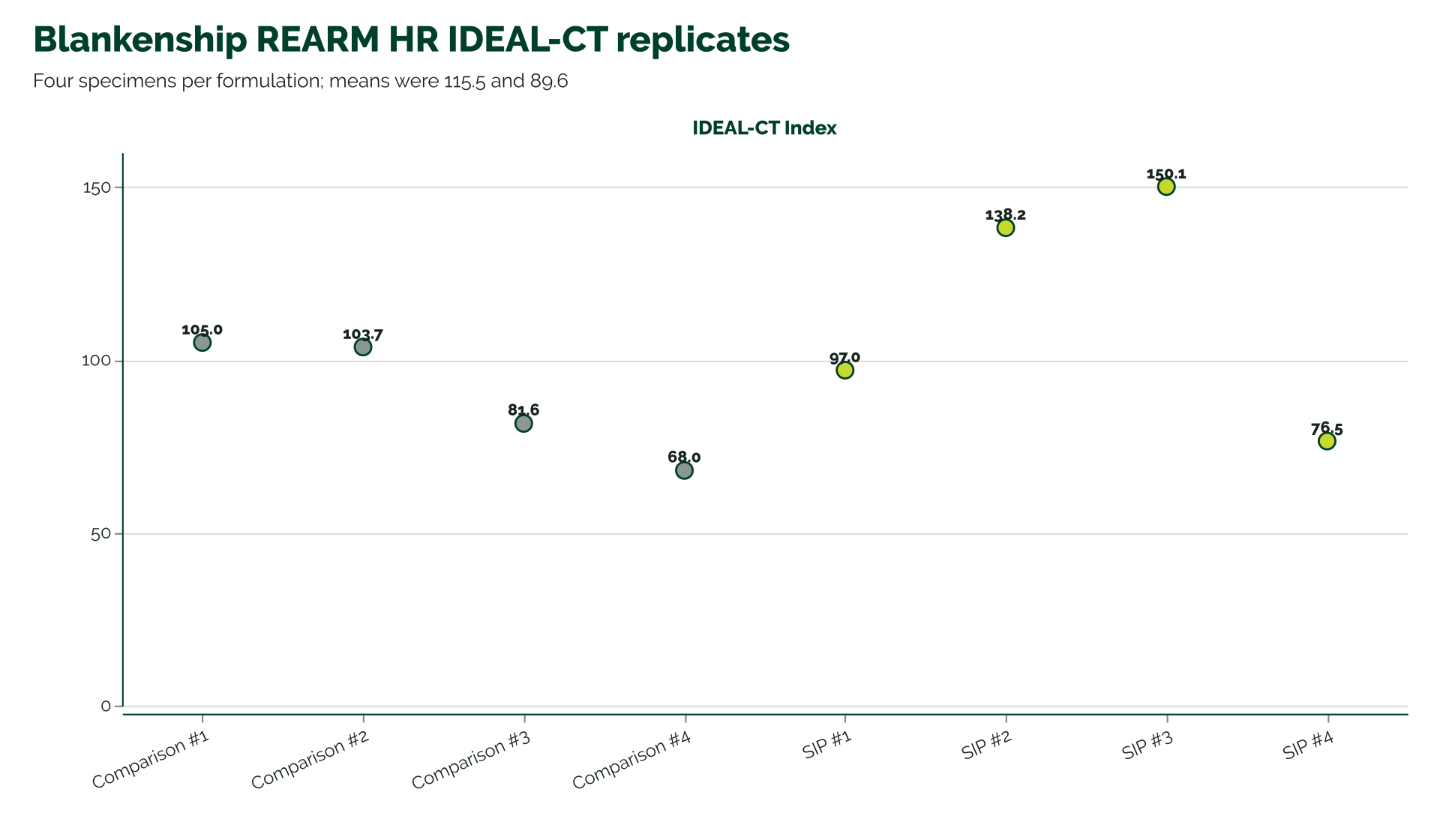
Higher IDEAL-CT Index is favorable; replicate values and reported COV provide variability context.
| Formulation | Specimen | CT Index | Reported mean | Reported COV (%) |
|---|---|---|---|---|
| Comparison bio-oil | 1 | 105 | 89.6 | 20 |
| Comparison bio-oil | 2 | 103.7 | 89.6 | 20 |
| Comparison bio-oil | 3 | 81.6 | 89.6 | 20 |
| Comparison bio-oil | 4 | 68 | 89.6 | 20 |
| SIP-1111™ | 1 | 97 | 115.5 | 29.9 |
| SIP-1111™ | 2 | 138.2 | 115.5 | 29.9 |
| SIP-1111™ | 3 | 150.1 | 115.5 | 29.9 |
| SIP-1111™ | 4 | 76.5 | 115.5 | 29.9 |
Source: Evaluation of Engineered High RAP Mixture REARM HR with Invigorate. PDF page 8, IDEAL-CT table
Source Documents
- Evaluation of Engineered High RAP Mixture REARM HR with Invigorate, Blankenship Asphalt Tech & Training, 2021-03-30 Report reviewed by SoyLei; public download withheld pending publication permission.
- Chemically mediated asphalt rejuvenation via epoxidized vegetable oil derivatives for sustainable pavements, Fuel, 2023
- Asphalt compositions including epoxidized renewable oils and methods of making and using the same, United States Patent and Trademark Office, 2023-10-03