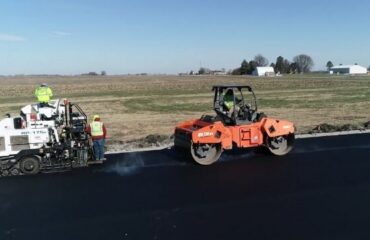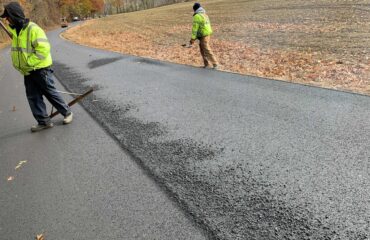
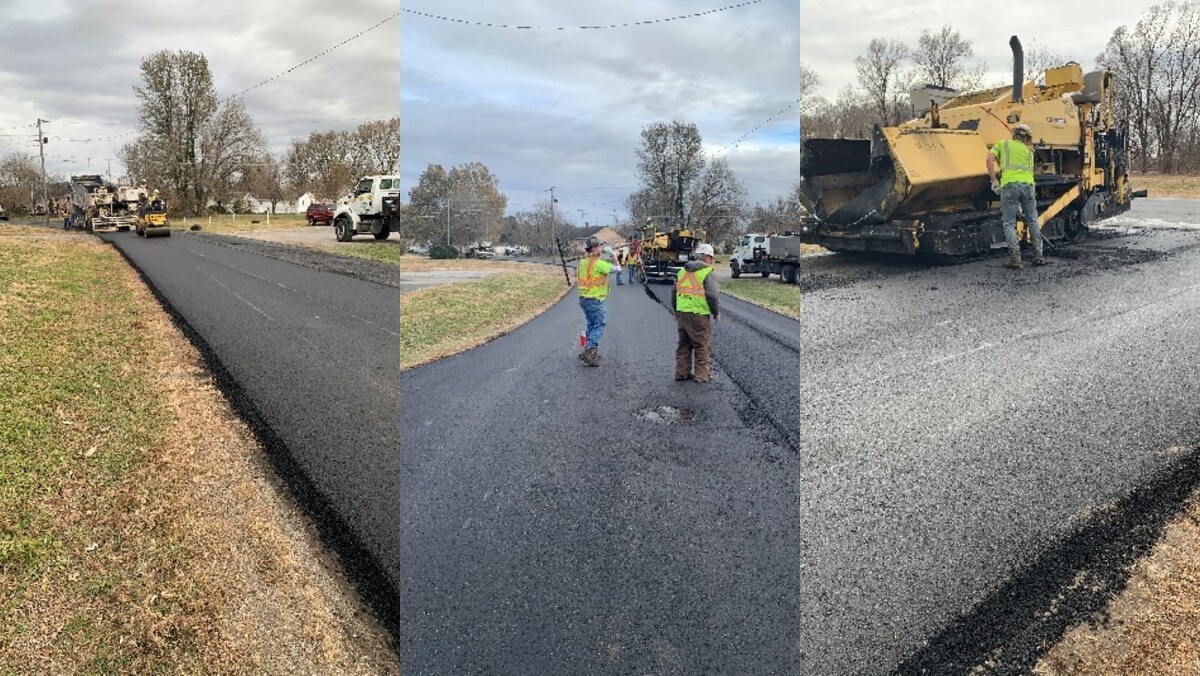
On November 14, 2019, a city-street demonstration on West Cliff Street in St. Joseph, Missouri, put 25% reclaimed asphalt pavement into a polymer-modified asphalt mixture built with BioMAG™.
BioMAG™ combines 50% SIP-1111™ rejuvenator with 50% biopolymer. The St. Joseph project tested how that chemistry worked with SBS in a terminal-blended binder, then measured the binder recovered from the completed 25% RAP mixture.
The recovered 25% RAP binder held the grade range
Before RAP entered the mixture, the modified binder tested at a continuous PG of 71.4/-30.3 with a 0.6°C ΔTc. Binder recovered from the 25% RAP mixture tested at 71.8/-29.9 with a 1.0°C ΔTc.
The high- and low-temperature endpoints moved by only 0.4°C after RAP was incorporated. The recovered binder therefore retained the modified binder’s 101.7°C continuous grade span while carrying 25% recycled asphalt.
MSCR results quantify the polymer response
The binder formulation listed 6.0% BioMAG™, 2.00% SBS, and 0.13% sulfur. Before RAP, it recorded 66.52% MSCR recovery with Jnr 0.30 at 58°C and 51.45% recovery with Jnr 0.77 at 64°C.
After recovery from the 25% RAP field mixture, the binder recorded 55.11% recovery with Jnr 0.26 at 58°C and 38.67% recovery with Jnr 0.75 at 64°C. These paired results provide the direct comparison asphalt teams need: polymer response measured before recycled material entered the mix and again in binder recovered from the placed mixture.
BioMAG™ expanded both ends of the starting binder grade
The unmodified starting binder tested at a continuous PG of 66.2/-24.3 with a -1.1°C ΔTc. After modification, the high-temperature endpoint increased by 5.2°C, the low-temperature endpoint moved 6.0°C colder, and ΔTc moved to 0.6°C.
The case study also compared the 2.00% SBS formulation with the greater than 4-5% SBS dosage it identified as typical for achieving the reported elastic recovery. St. Joseph demonstrates a practical route for extending polymer performance while preserving a wide binder grade range in a 25% RAP mixture.
Terminal blending carried through to a city street
The project tracking record documents vessel blending at the asphalt terminal before delivery to the contractor. The field case study reports more than ten days of hot storage and stable binder performance through that extended holding period.
For terminals and producers, the result connects formulation, storage, recycled-content production, and recovered-binder verification in one commercial-scale project. The key field takeaway is concrete: 25% RAP with a recovered continuous PG of 71.8/-29.9, a 1.0°C ΔTc, and 38.67% MSCR recovery at 64°C.
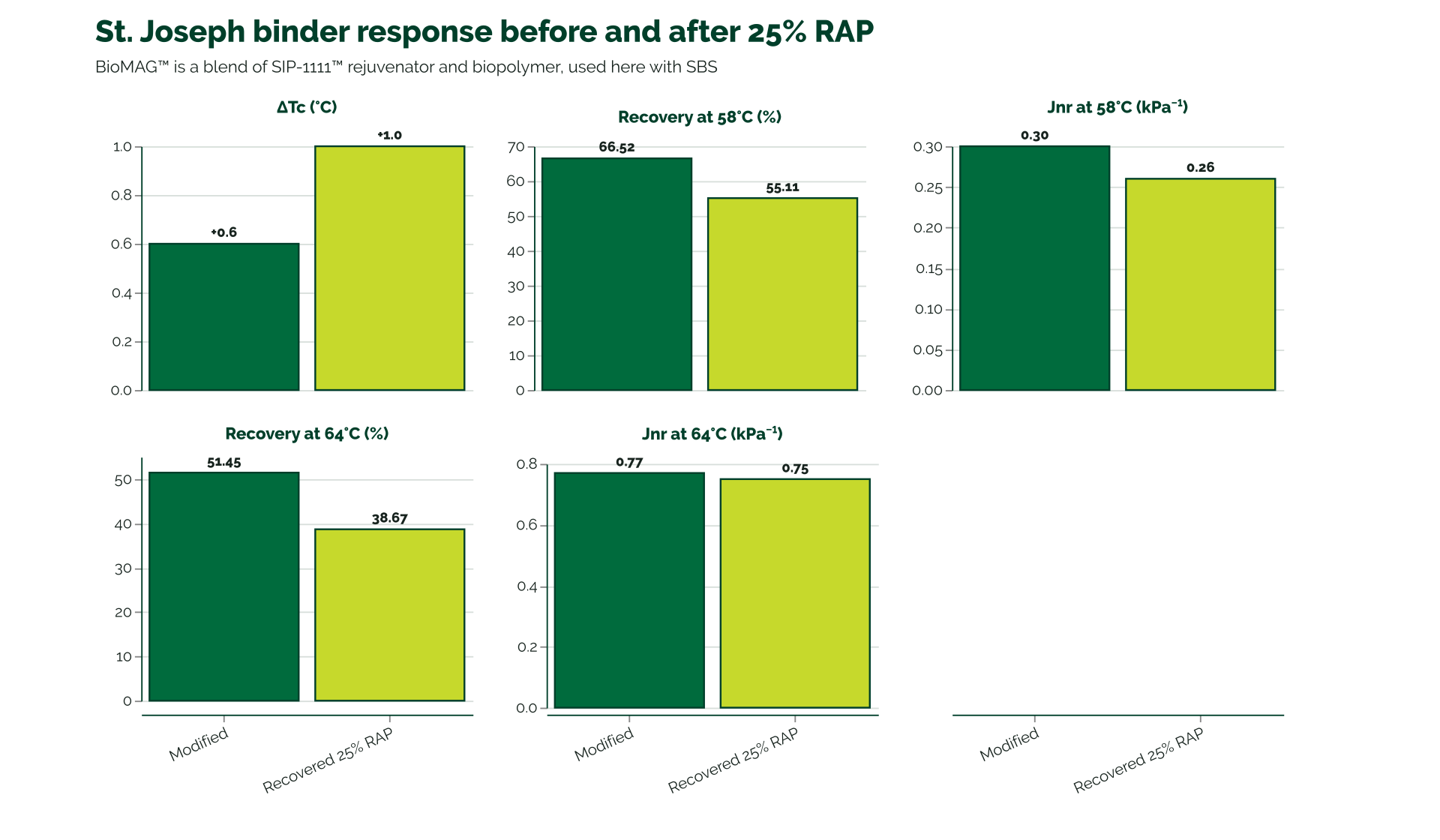
Higher recovery and lower Jnr are favorable; the two states are stages of one formulation.
| Binder state | High endpoint (°C) | Low endpoint (°C) | ΔTc (°C) | Recovery 58°C (%) | Jnr 58°C (kPa⁻¹) | Recovery 64°C (%) | Jnr 64°C (kPa⁻¹) |
|---|---|---|---|---|---|---|---|
| Modified before RAP | 71.4 | -30.3 | 0.6 | 66.52 | 0.3 | 51.45 | 0.77 |
| Recovered from 25% RAP | 71.8 | -29.9 | 1 | 55.11 | 0.26 | 38.67 | 0.75 |
Source: Thermoplastic Elastomers Derived From Vegetable Oils. St. Joseph BioMAG section, Figure 3 and Table 5, PDF page 6
Review SIP-1111™ · See related demonstration projects · Discuss a high-RAP or polymer-modified binder program with SoyLei
Source Documents
- Development of Bio-Based Polymers for Use in Asphalt, Phase II, Iowa State University Institute for Transportation, 2020
- SIP-1111™ Demonstration Paving Results, SoyLei Innovations, 2025