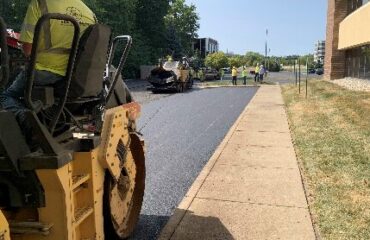
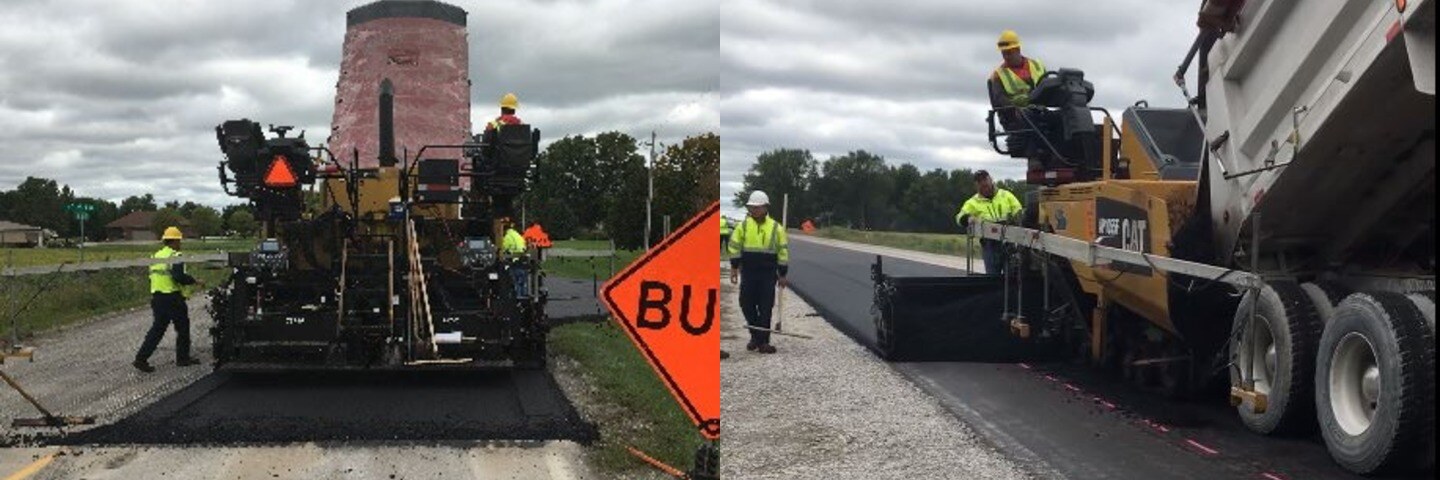
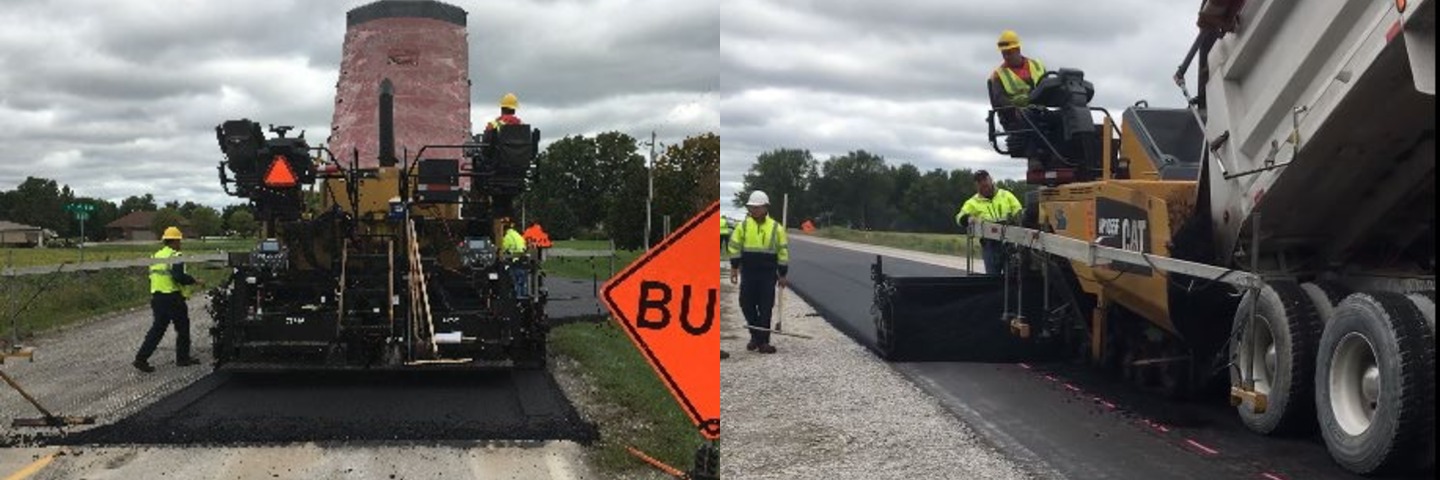
On September 10, 2019, an Iowa State University field team brought BioMAG™ to a full-scale city-road demonstration on NE 80th Street in Altoona, Iowa. The hot-mix asphalt carried 20% reclaimed asphalt pavement and used an SBS-modified 58-28H binder.
BioMAG™ combines 50% SIP-1111™ rejuvenator with 50% biopolymer. The formulation brings asphalt-binder rejuvenation and polymer-network support into a single liquid additive for recycled and polymer-modified mixtures.
Lower-temperature performance from the same SBS-modified binder
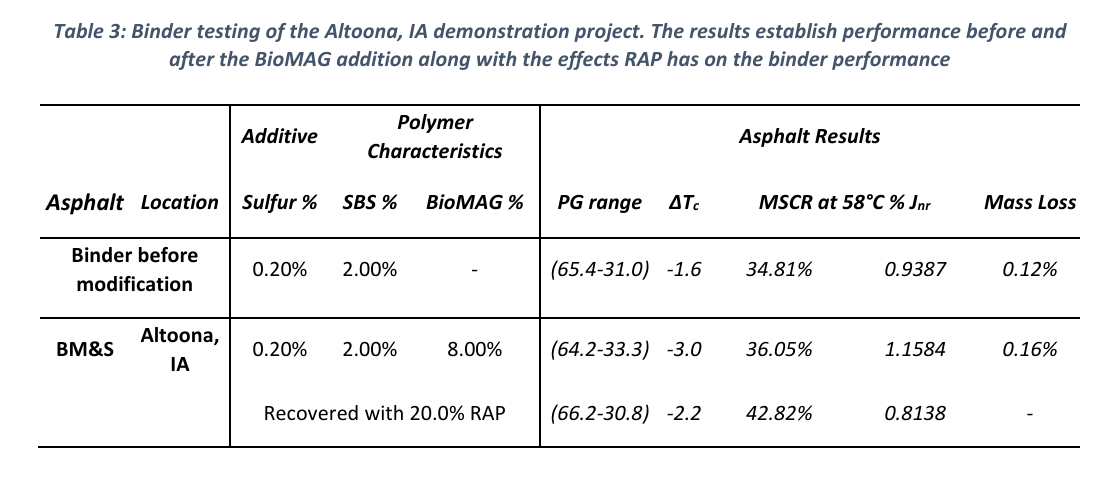
Binder testing compared the 58-28H material before modification with the same binder after an 8% BioMAG™ addition. The low critical temperature shifted from -31.0°C to -33.3°C. The high critical temperature moved from 65.4°C to 64.2°C, expanding the measured PG temperature interval from 96.4°C to 97.5°C.
MSCR recovery at 58°C increased from 34.81% to 36.05%. The complete comparison recorded a ΔTc change from -1.6°C to -3.0°C and a Jnr change from 0.9387 to 1.1584 kPa-1.
Performance after recovery with 20% RAP
The binder recovered from the field mixture measured a PG range of 66.2°C to -30.8°C, a ΔTc of -2.2°C, 42.82% MSCR recovery at 58°C, and Jnr of 0.8138 kPa-1. For comparison, the untreated virgin-binder baseline measured 65.4°C to -31.0°C, 34.81% recovery, and Jnr of 0.9387 kPa-1. The comparison documents the binder response after BioMAG™ entered a production mixture carrying 20% reclaimed asphalt.
A field-scale blending lesson
The Altoona material was blended in a tanker and conditioned over four days before paving. Field inspection identified premature polymer crosslinking under that delivery method. Feedback from the terminal, contractor, and Iowa State University team established a clear production requirement for more efficient BioMAG™ mixing and blending.
What Altoona demonstrates
Altoona established a field-scale route for pairing binder rejuvenation with polymer support in recycled asphalt. The project placed a 20% RAP roadway, improved the binder’s low critical temperature by 2.3°C, increased MSCR recovery at 58°C, and converted field experience into a defined production-control requirement.
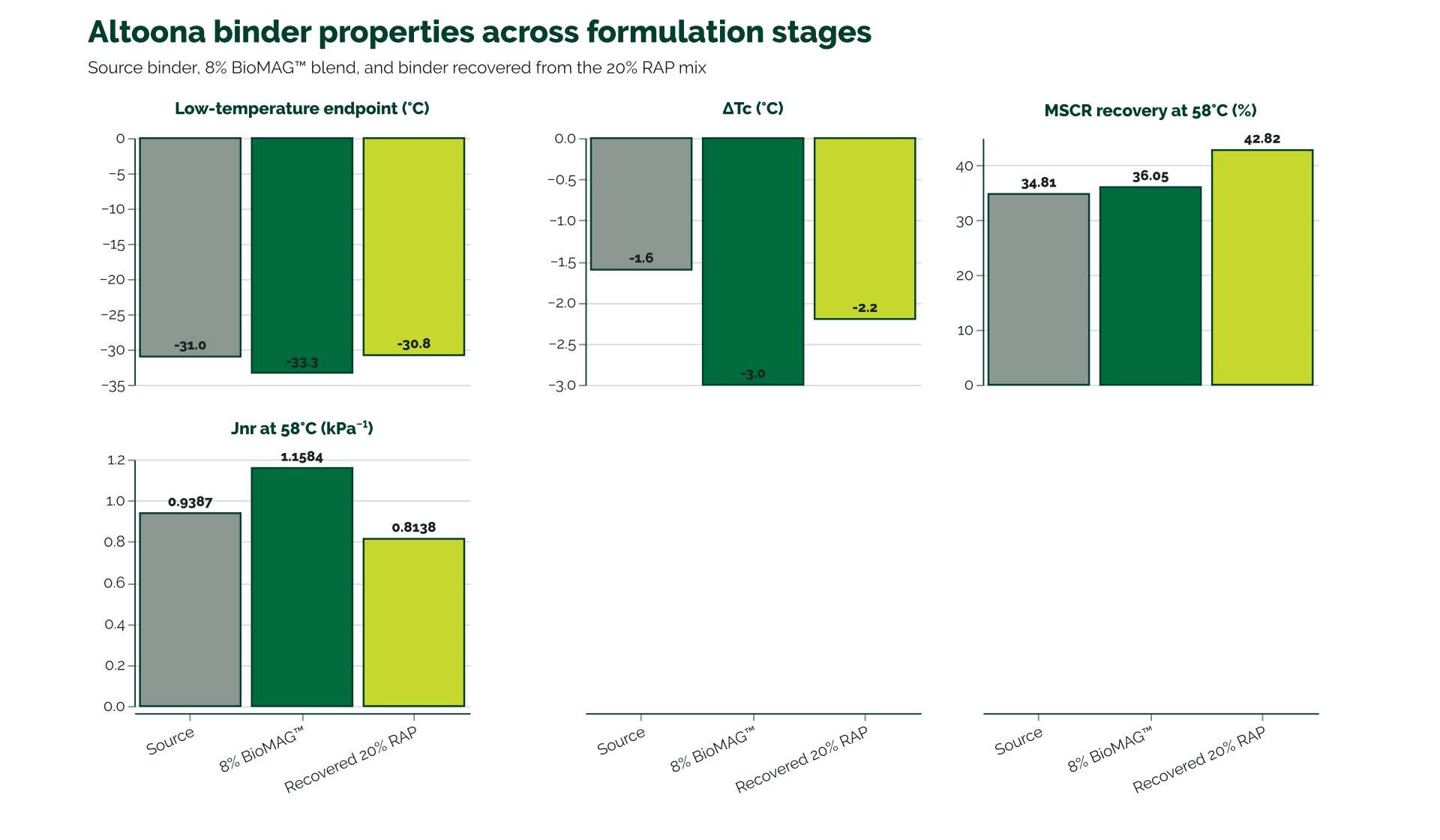
More-negative low endpoint, higher recovery, lower Jnr, and less-negative ΔTc are generally favorable; stages are not competing treatments.
| Stage | High endpoint (°C) | Low endpoint (°C) | ΔTc (°C) | MSCR recovery at 58°C (%) | Jnr at 58°C (kPa⁻¹) |
|---|---|---|---|---|---|
| Source binder | 65.4 | -31 | -1.6 | 34.81 | 0.9387 |
| 8% BioMAG™ | 64.2 | -33.3 | -3 | 36.05 | 1.1584 |
| Recovered 20% RAP binder | 66.2 | -30.8 | -2.2 | 42.82 | 0.8138 |
Source: Case Studies in BioMAG, a High Performance Polymer Modifier and InvigoSoy. Altoona demonstration, PDF page 4, Table 3
Explore SIP-1111™ · See more demonstration projects · Discuss a recycled-asphalt formulation with SoyLei
Source Documents
- Development of Bio-Based Polymers for Use in Asphalt, Phase II, Iowa State University Institute for Transportation, 2020
- SIP-1111™ Demonstration Paving Results, SoyLei Innovations, 2025