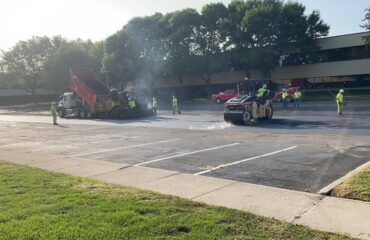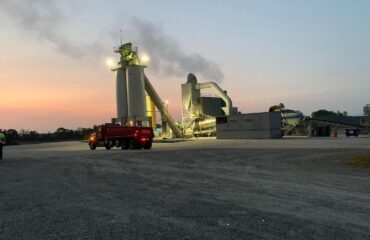
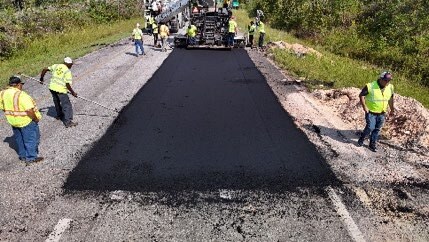
NCAT Test Track Section S1 paired a 50% RAP surface mixture with SIP-1111™ at 4.1% by weight of total asphalt binder. After one year of heavy truck traffic and about 4 million ESALs, the section had no visible surface cracking and less than 3.5 mm of rut depth.
Balanced mix design selected the field dosage
The 12.5-mm dense-graded design used 50% RAP and PG 67-22 virgin binder. IDEAL-CT testing at 25°C increased from a CT Index of 32.2 without rejuvenator to 57.7 at 4.1% SIP-1111™. The selected dosage exceeded the paper’s stated minimum CT Index of 50 for Alabama surface mixtures.
Hamburg testing checked the other side of the balanced-design decision. At 4.1% SIP-1111™, the mixture recorded 4.6 mm of rut depth after 10,000 passes, below the 10-mm ALDOT wearing-surface limit cited in the paper. Testing was performed at 50°C under AASHTO T 324.
One-year field results
| Measure | Section S1 result | Condition |
|---|---|---|
| Surface cracking | No visible cracking | One year; about 4 million ESALs |
| Rut depth | Less than 3.5 mm | One year; about 4 million ESALs |
| IRI | 1.0-1.2 m/km | One year; about 4 million ESALs |
| Mean Profile Depth | 1.0 mm to 0.7 mm | One year; about 4 million ESALs |
A direct path from mix design to trafficking
Section S1 connects laboratory dosage selection, continuous-plant production, full-scale placement, and accelerated trafficking in one high-RAP program. Producers can evaluate the same 4.1% total-binder dosage across cracking, rutting, ride quality, and surface texture rather than relying on a single laboratory measure.
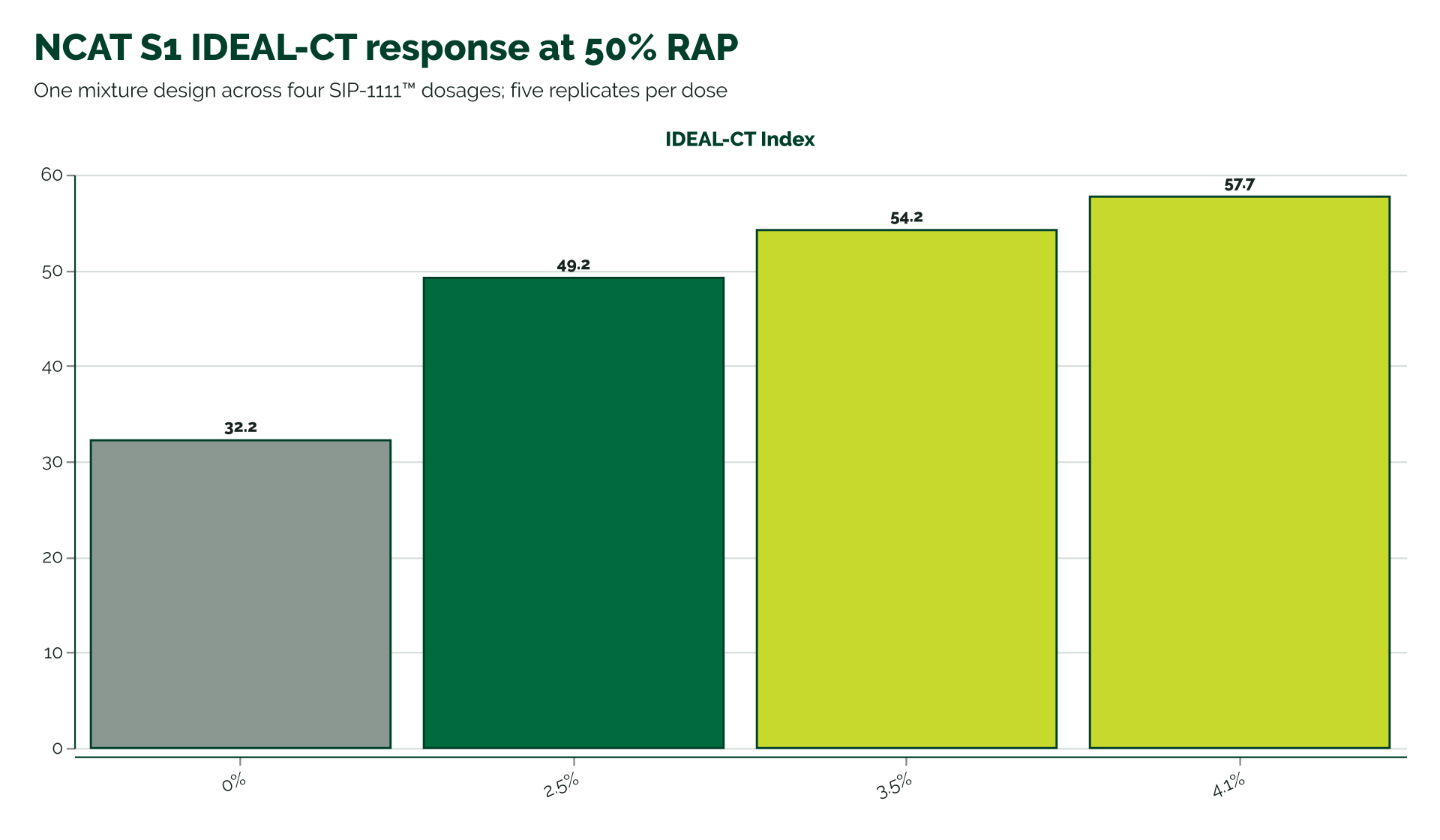
Higher IDEAL-CT Index is favorable; the source cites a threshold of 50.
| SIP-1111™ dosage (% total binder) | IDEAL-CT Index | Replicates | Source threshold |
|---|---|---|---|
| 0 | 32.2 | 5 | 50 |
| 2.5 | 49.2 | 5 | 50 |
| 3.5 | 54.2 | 5 | 50 |
| 4.1 | 57.7 | 5 | 50 |
Source: Field Evaluation of Soy-Based Recycling Agent in High-RAP Asphalt Mixtures. Section 3.1 and Figure 1, PDF page 3
Review SIP-1111™ · See related demonstration projects · Discuss a high-RAP field evaluation with SoyLei
Source Documents
- Epoxidized Soybean Oil Rejuvenator for High-RAP Asphalt Pavements, National Center for Asphalt Technology, 2026