News - Soylei
Saturday, 25 July 2026 / Published in Research & Evidence, SIP-1133™
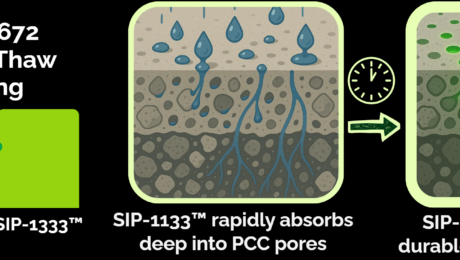
Graphic comparing control and SIP-1133 freeze-thaw cycles, followed by illustrations of absorption into concrete pores and curing into a sealant.
Field studies followed treated and untreated concrete for 8.2 to 16 years. See what lasted, why reapplication mattered, and how SIP-1133™ laboratory results fit.
Saturday, 25 July 2026 / Published in APEX 1132 General, APEX-1132
SoyLei's Eric Cochran joins Heidi J. Ellsworth on Roofing Road Trips to talk about APEX-1132, engineered SESO chemistry, and why roof reconditioning is becoming a practical service opportunity for contractors.
Saturday, 25 July 2026 / Published in APEX 1132 General, APEX-1132
SoyLei Is Now Listed on RoofersCoffeeShop® — Bringing Science-Backed Roof Maintenance to More Contractors
SoyLei is now listed on RoofersCoffeeShop, helping residential roofing contractors learn more about APEX-1132, a science-backed asphalt-shingle rejuvenation treatment.
Saturday, 25 July 2026 / Published in Asphalt Research, SIP-1111™, SIP-1111™ Rejuv
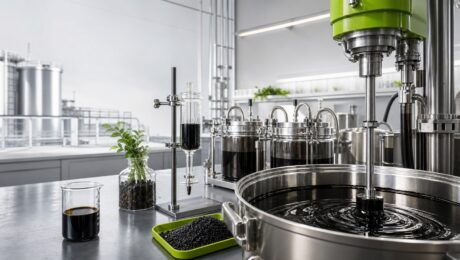
Soybeans, asphalt binder, molecular models, and patent documents arranged on a technical workbench.
Explore the eleven Iowa State University Research Foundation technology families licensed for SoyLei's asphalt and plant-oil platform.
Saturday, 25 July 2026 / Published in Asphalt Research, SIP-1111™, SIP-1111™ Rejuv
Asphalt-terminal tanks behind a laboratory bench with binder samples and testing instruments.
Laboratory grading and MSCR results show how SIP-1111™ addition sequence can widen the useful grade range of polymer-modified asphalt while preserving E-class traffic performance.
Saturday, 25 July 2026 / Published in Asphalt Research, SIP-1111™, SIP-1111™ Rejuv
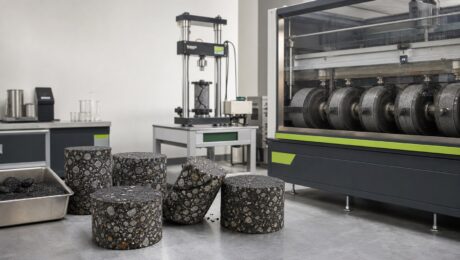
Asphalt specimens and laboratory testing equipment arranged around a roadway-materials workbench.
AASHTO PEAS evaluated SIP-1111™ in a 45% RAP laboratory mixture, reporting improved low-temperature binder grade, Delta Tc, Overlay cycles, and IDEAL-CT results with Hamburg rut depth remaining below 4 mm at 20,000 passes.
Saturday, 25 July 2026 / Published in Asphalt Research, SIP-1111™, SIP-1111™ Rejuv
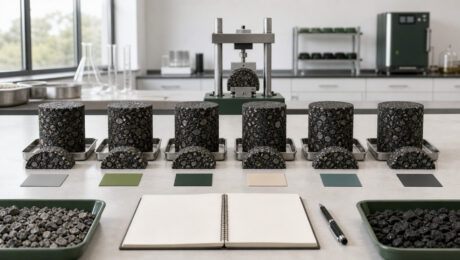
Six unlabeled asphalt specimen sets arranged in a bright laboratory with a cracking-test fixture behind them.
In a blinded ATS comparison, two SIP-1111™ treatments produced the study's two lowest Hamburg deformation values while preserving the full cracking and dosage-efficiency context.
Saturday, 25 July 2026 / Published in Asphalt Research, SIP-1111™, SIP-1111™ Rejuv
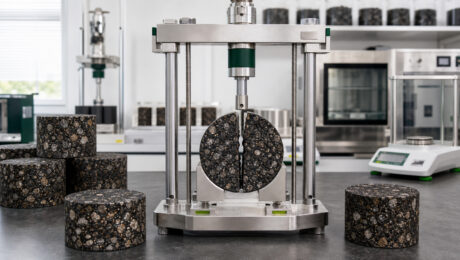
Asphalt specimens surrounding a laboratory fracture-testing fixture, with a split specimen centered in the apparatus.
A Blankenship Asphalt Tech & Training study compared two bio-oil formulations in an engineered 45% RAP mixture and measured the balance between IDEAL-CT cracking tolerance and Hamburg rutting resistance.
Saturday, 25 July 2026 / Published in Demo Projects, SIP-1111™, SIP-1111™ Rejuv
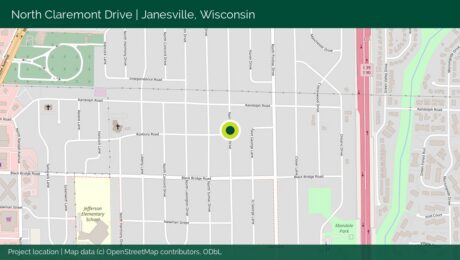
Street map of Janesville centered on the SIP-1111 project location on North Claremont Drive.
A North Claremont Drive field trial paired 40% aged-binder replacement with 0.5% SIP-1111™. DCT averaged 358 versus 355 J/m² and IDEAL-CT averaged 193.5 versus 188.2 for the same mixture with 0.5% Anova.
Saturday, 25 July 2026 / Published in Demo Projects, SIP-1111™, SIP-1111™ Rejuv
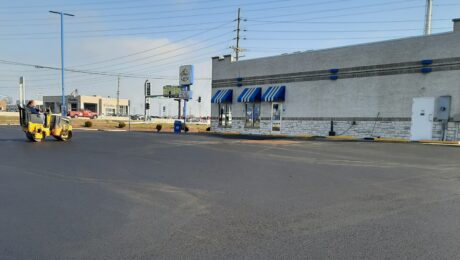
Roller compacting the newly paved asphalt surface beside a commercial building in St. Peters, Missouri.
A full-scale Missouri demonstration compared control, 1.75%, and 3.5% SIP-1111™ sections in a 35% RAP mix, followed by CT Index, DCT, and I-FIT testing at Iowa State University.
TOP